Best Types of Pizza Peels
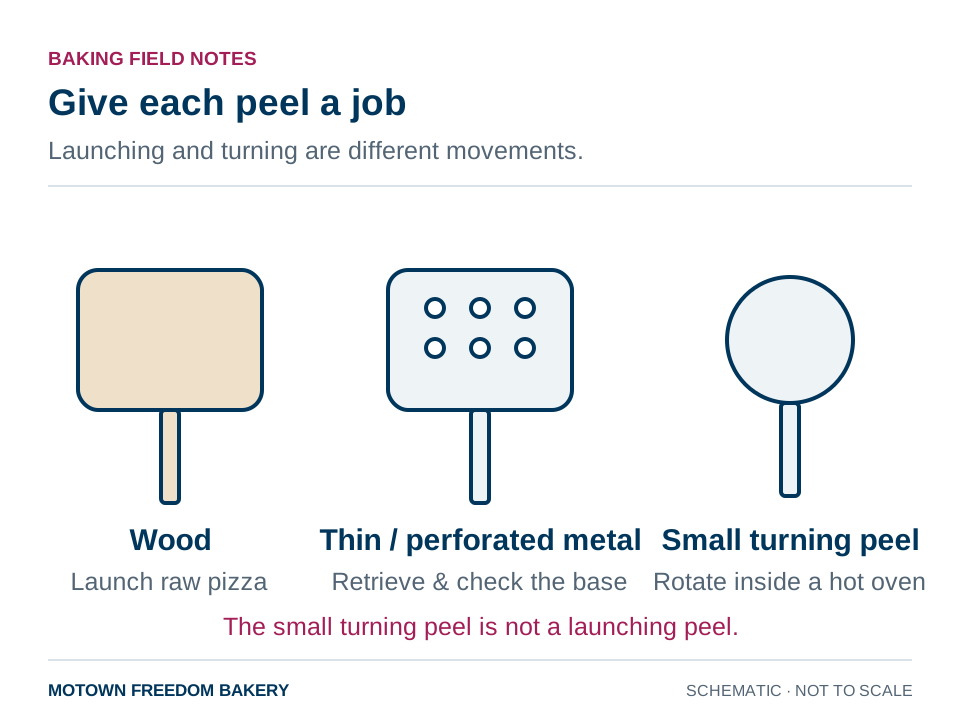
If you're buying one pizza peel, the type to get depends on how you bake. A wooden peel is the easiest for launching a raw pizza onto a stone or steel, because the dough sticks less to wood. A thin metal or perforated peel is best for turning and retrieving a baked pizza, and perforated peels also shake off excess flour that would otherwise burn.
Many home pizza makers end up with both: wood to launch, metal to retrieve. Here's how each type works.
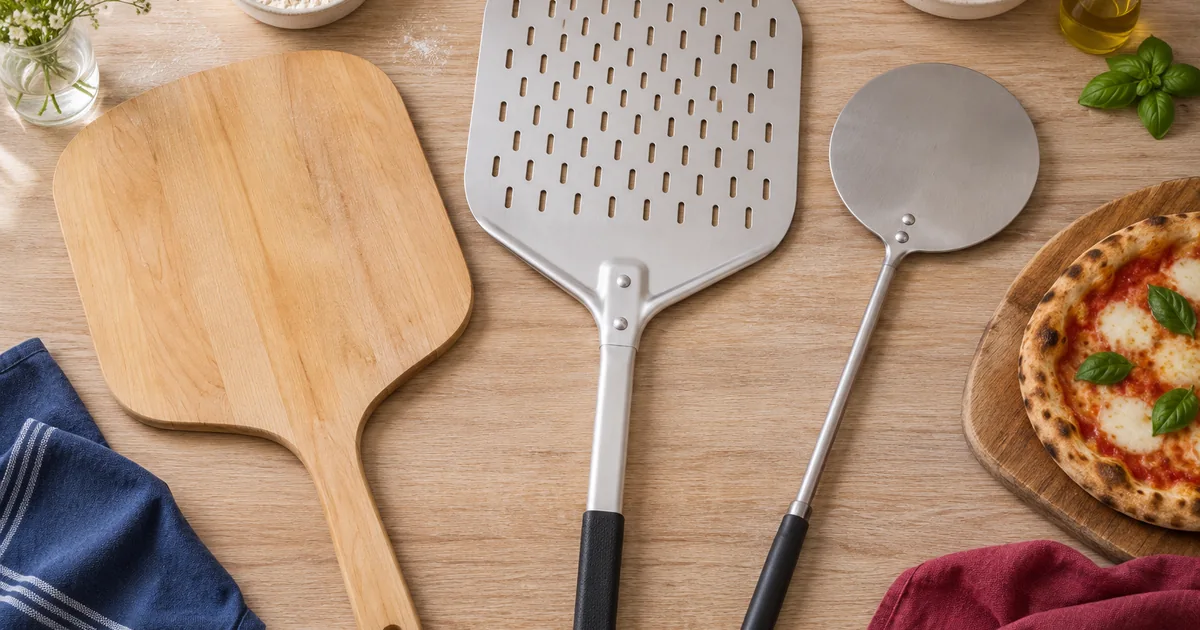
Types of pizza peels at a glance
| Type | Material | Strengths | Weaknesses | Best for |
|---|---|---|---|---|
| Wooden | Maple, beech, bamboo, acacia | Dough releases easily; doubles as a serving board | Thick edge; can warp; needs drying | Launching, beginners |
| Composite | Wood-fiber composite (e.g. Epicurean) | Thin, durable, dishwasher safe | Stickier than wood | All-round use |
| Solid metal | Aluminum or stainless | Thin edge, light, slides under pizza | Raw dough sticks more | Retrieving, turning |
| Perforated metal | Anodized aluminum with holes | Sheds flour, less sticking, light | Higher cost; holes can snag wet dough | Launching and retrieving |
| Turning peel | Small round metal peel on a long handle | Rotates pizza inside the oven | Too small to launch | Outdoor pizza ovens |
| Sliding (conveyor) peel | Fabric belt over a frame | Launches even sticky dough | More parts to clean | Beginners, wet doughs |
Wooden peels
Wood is slightly porous and textured, so a lightly floured pizza slides off it with a shake. That makes it the most forgiving peel for launching. Wooden peels also double as cutting and serving boards.
The downsides: the edge is thicker, so it's harder to slip under a baked pizza, and wood can warp or crack if it's left wet. Wipe it, let it dry standing up, and never soak it. Avoid cutting on it if you also launch from it, since knife grooves catch dough.
Composite peels
Composite peels, such as Epicurean's, are made of wood fiber and resin. They're thin like metal, durable like plastic, and dishwasher safe. Dough sticks to them a bit more than to bare wood, so use a little more flour or semolina.
Solid metal peels
Usually aluminum, sometimes stainless steel, often with a wooden or metal handle. The thin, tapered edge slides under a baked pizza easily, which makes metal the best choice for retrieving and checking the bottom. Raw dough sticks to metal more than to wood, so dust it well before building a pizza on it. American Metalcraft makes the aluminum peels many pizzerias use.
Perforated peels
A metal peel with holes or slots. When you shake the peel, the extra flour falls through the holes instead of going into the oven, where it would burn and turn the bottom bitter. The holes also reduce the contact area, so dough sticks less. Perforated peels from makers such as Gi.Metal and Ooni are a favorite of serious home pizza makers because they do both launching and retrieving reasonably well.
Turning peels
A turning peel is a small round metal peel, usually 7 to 9 inches across, on a long handle. You use it to spin the pizza inside the oven without taking it out. In outdoor pizza ovens running at 800°F or more, the side nearest the flame cooks in seconds, so you need to turn the pizza every 15 to 20 seconds. In a home oven at 500°F, a turning peel is optional; you can rotate the pizza with a regular peel once halfway through.
Sliding (conveyor) peels
A sliding peel has a fabric belt that rolls around a flat frame. You place the pizza on the belt, set the peel on the stone, and pull back; the belt rolls the pizza off. The Super Peel is the best-known example. It's the easiest way to launch wet, sticky or oddly shaped dough, and a good choice if you keep losing pizzas off the peel.
What size peel to buy
- Width: about 2 inches wider than your pizza. A 12-inch pizza needs a 14-inch peel.
- Oven fit: in a home oven, a 14 x 16 inch peel fits most stones and leaves room to maneuver. Check the depth of your oven too.
- Handle length: short handles (about 8 inches) are easier in a home kitchen; long handles (24 inches or more) keep your hands away from the heat of outdoor ovens.
Which combination to choose
- Home oven, occasional pizza: one wooden or composite peel, 14 inches.
- Home oven, regular pizza night: a wooden peel to launch and a thin metal peel to retrieve, or one perforated peel for both.
- Outdoor pizza oven: a perforated launching peel plus a turning peel.
- Sticky, high-hydration dough: a sliding peel.
You can compare peels, stones and pizza pans in our specialty pans and molds section. To choose the baking surface, see our guide to pizza stone materials.
Frequently Asked Questions
Wood is better for launching raw pizza; metal is better for turning and retrieving baked pizza. A perforated metal peel does both reasonably well.
The dough is too wet, it sat on the peel too long, or the peel needed more flour or semolina. Build the pizza quickly, give the peel a shake before topping to check it slides, and launch right away.
Only for very hot outdoor pizza ovens. In a home oven, rotating once with a regular peel is enough.
You can on a wooden or composite peel, but knife marks roughen the surface and make dough stick when you next launch. Many people keep one peel for cutting and serving and another for launching.