Best Pizza Pan Materials
For a crisp, browned crust in a home oven, the best pizza pan material is heavy, dark metal: seasoned carbon steel, blue steel, or cast iron. They soak up oven heat and push it hard into the bottom of the dough, which is what home ovens, topping out around 500 to 550°F, struggle to do. Light aluminum is the better choice when you want an even, golden crust without much char, and a perforated aluminum pan crisps the bottom by letting moisture escape.
The right material also depends on the style of pizza. Here's how they compare.
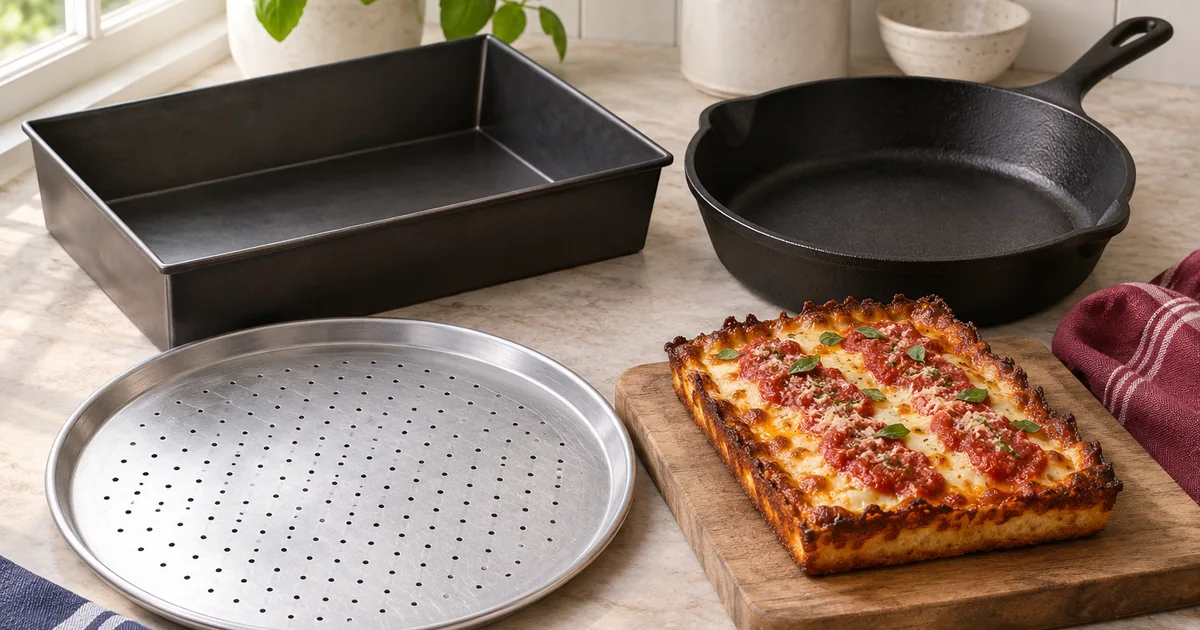
Why pizza is hard in a home oven
Pizzeria ovens run at 600 to 900°F, and the dough sits right on a hot floor. A home oven is cooler, and a thin pan sitting in the air doesn't store much heat. So the cheese melts and browns before the bottom crust crisps.
The fix is a pan that carries a lot of heat into the dough at once. That comes from two things: mass (thick, heavy metal stores more heat) and color (dark surfaces absorb radiant heat). Preheating the pan helps too, though pan pizzas usually go in cold with oiled dough.
If you don't need a pan at all, as with thin-crust pies baked straight on a hot surface, see our guide to pizza stone materials.
Pizza pan materials compared
| Material | Heat | Crust | Care | Best for |
|---|---|---|---|---|
| Light aluminum | Fast, even, holds little heat | Golden, softer | Easy; can discolor | Thin pies, New York style, frozen pizza |
| Perforated aluminum | Fast, vents steam | Crisper bottom | Easy | Thin and frozen pizza, reheating |
| Dark anodized aluminum | Fast, absorbs more heat | Crisp, browned | Easy | Detroit, Sicilian, pan pizza |
| Carbon or blue steel | Holds heat well | Very crisp, fried edges | Season, dry well | Detroit style, pan pizza, deep dish |
| Cast iron | Holds the most heat | Thick, crunchy, fried bottom | Season; heavy | Pan pizza, deep dish, skillet pizza |
| Stainless steel | Uneven | Patchy | Dishwasher safe | Serving more than baking |
| Nonstick-coated steel | Fast | Easy release, softer | No metal cutters; heat limits | Kids' pizza, easy cleanup |
The main materials
Aluminum
The classic round pizzeria pan. It's light, cheap and bakes evenly, but it doesn't hold much heat, so the crust stays pale unless the oven is very hot. Dark, hard-anodized aluminum absorbs more heat. LloydPans, a long-time supplier to pizzerias, makes hard-anodized Detroit and pan pizza pans that many home bakers use.
Perforated pans and screens
Holes in the pan, or a mesh pizza screen, let steam escape from under the dough and let hot air reach the bottom. The result is a crisper base, especially for thin crusts and frozen pizza. Soft doughs can sink into the holes, so use them with stiffer doughs or after the crust has set.
Carbon steel and blue steel
The original Detroit-style pizzas were baked in blue steel trays first made for the auto industry. The dark, heavy steel fries the oiled dough at the edges into a crunchy, cheesy frame. Carbon steel pans need seasoning, like a wok, and must be dried right after washing to prevent rust.
Cast iron
The heaviest option. A cast iron skillet or pizza pan, such as Lodge's 14-inch pan, gives a thick, deeply browned, almost fried bottom crust. It's ideal for pan pizza and deep dish. It's heavy to handle and needs seasoning.
Nonstick coatings
Nonstick pans release cheese easily, but most coatings shouldn't be heated much above 500°F, which is right where pizza wants to be. Cutting on them also scratches the coating, so slide the pizza onto a board first.
Matching the pan to the pizza
- Thin crust and New York style: light aluminum or a perforated pan, or no pan at all on a stone or steel. 12 to 16 inch rounds.
- Detroit style: a deep rectangular pan, usually 10 x 14 inches, in blue steel or dark anodized aluminum, with sides about 2½ inches tall.
- Sicilian and grandma pies: a dark half-sheet or 9 x 13 inch rectangular pan.
- Chicago deep dish: a round pan with sides of 1½ to 2 inches, in dark aluminum, steel or cast iron.
- Pan pizza: cast iron skillet or a dark round pan with 1 to 1½ inch sides.
You can compare pans and other pizza gear in our specialty pans and molds section.
Frequently Asked Questions
Dark pans make crispier, browner crusts in a home oven. Light pans bake more gently and suit thin crusts and hot ovens.
Yes, for crispness. The holes let moisture escape so the bottom doesn't steam. They don't help much for thick, soft doughs, which can sag into the holes.
Yes, and it's one of the easiest ways to get a crisp crust at home. Oil the skillet, press the dough in, top it, and bake at 500°F or more.
A deep, rectangular pan of blue steel or dark anodized aluminum, usually 10 x 14 inches. The straight, dark sides crisp the cheese that's pushed to the edge.