Best Baking Sheet Materials
The best baking sheet material for most kitchens is heavy-gauge, light-colored aluminum. It spreads oven heat evenly across the whole sheet, so cookies bake at the same rate from corner to center, and it browns gently instead of scorching. Restaurant kitchens use plain aluminum half sheets for exactly that reason, and the Nordic Ware Naturals Half Sheet is the home version most bakers know.
A close second is aluminized steel, which bakes almost the same way and is stiffer. The other materials each have a narrower job, explained below.
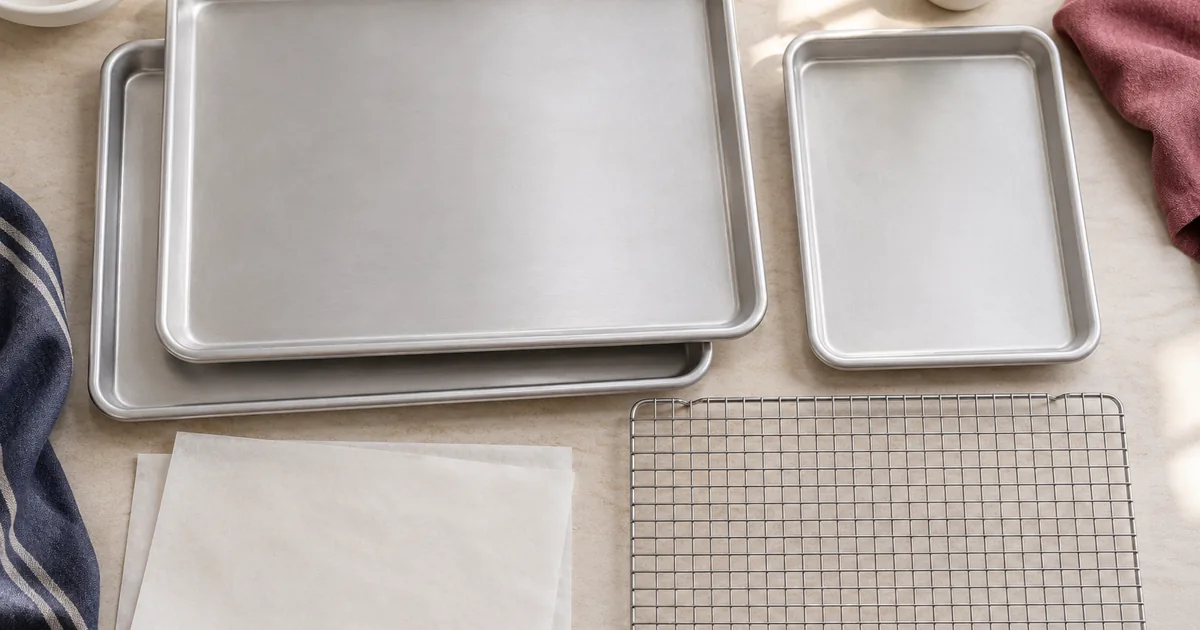
What a baking sheet has to do
A baking sheet is thin, so it reacts quickly to the oven. That's useful, but it also means the metal decides a lot:
- Even heat keeps cookies from burning in one corner while the others are raw. Good conductors (aluminum) fix hot spots on their own; poor ones (stainless steel) don't.
- Color controls browning. Shiny, light sheets reflect heat; dark sheets absorb it and brown bottoms faster.
- Gauge (thickness) controls warping. A thin sheet buckles in a hot oven, often with a loud pop, then rocks on the rack and bakes unevenly.
Baking sheet materials compared
| Material | Heat spread | Browning | Warping | Coating | Best for |
|---|---|---|---|---|---|
| Bare aluminum, heavy gauge | Excellent | Even, golden | Low if thick | None | Cookies, roasting, everyday use |
| Aluminized steel | Very good | Even, golden | Very low | Often a silicone-based release coating | Cookies, sheet cakes, roasting |
| Nonstick (dark) steel | Good | Dark, fast | Medium | PTFE or ceramic | Delicate cookies, easy release |
| Stainless steel | Poor alone | Patchy | Low to medium | None | Roasting, broiling, acidic foods |
| Insulated (air-cushion) | Slow | Very light | Low | Often none | Soft cookies, avoiding burnt bottoms |
| Carbon steel | Good | Dark, crisp | Low | Seasoned | Pizza, bread, crisp roasting |
| Ceramic-coated | Good | Medium | Medium | Ceramic sol-gel | Buyers avoiding PTFE |
The main options
Bare aluminum
Even, gentle browning and no coating at all. Look for sheets labeled heavy gauge or commercial, often 18 gauge or thicker, with rolled rims and a reinforcing wire inside them. The downsides: bare aluminum discolors in the dishwasher and reacts a little with acidic food, so hand wash it and line it with parchment for tomato-heavy roasting.
Aluminized steel
A steel core coated in aluminum alloy, so it bakes like aluminum but stays flatter in hot ovens. USA Pan's sheets are the best-known example and usually carry a silicone-based release coating. A good choice if your aluminum sheets keep warping.
Nonstick
Usually dark steel with a PTFE coating. Cookies slide off, but the dark surface browns bottoms quickly, so cut the oven by about 25°F or check early. The coating also limits you: no metal spatulas, no broiling, and the sheet is done once the coating scratches. Use parchment on a bare sheet instead and you get easy release without the coating.
Stainless steel
Stainless is durable, coating-free and dishwasher safe, which makes it a popular non toxic choice. Plain stainless conducts heat poorly, though, so cookies bake unevenly, and food sticks unless the sheet is greased or lined. Clad stainless sheets with an aluminum core bake much more evenly but cost more. Stainless sheets are at their best for roasting and broiling.
Insulated sheets
Two layers of metal with an air gap. The gap slows heat, so cookie bottoms stay pale and soft. That helps if your oven runs hot or you like soft cookies, but crisp cookies take longer and spread more. They're also not good for roasting.
Carbon steel
Dark, heavy and seasoned like a wok. It browns hard and crisp, which is great for pizza, bread and roasted vegetables, and harsh on delicate cookies. It rusts if it's left wet.
Gauge, rims and size matter too
- Gauge. Lower numbers are thicker. 18 gauge or heavier resists warping. Thin, lightweight sheets, often sold in cheap sets, warp and bake unevenly whatever their metal.
- Rimmed or rimless. A rimmed baking sheet (a sheet pan) does everything: cookies, roasting, sheet cakes, catching drips. A rimless cookie sheet lets cookies slide off and lets air reach the edges, but it can't hold anything runny. If you buy one style, buy rimmed.
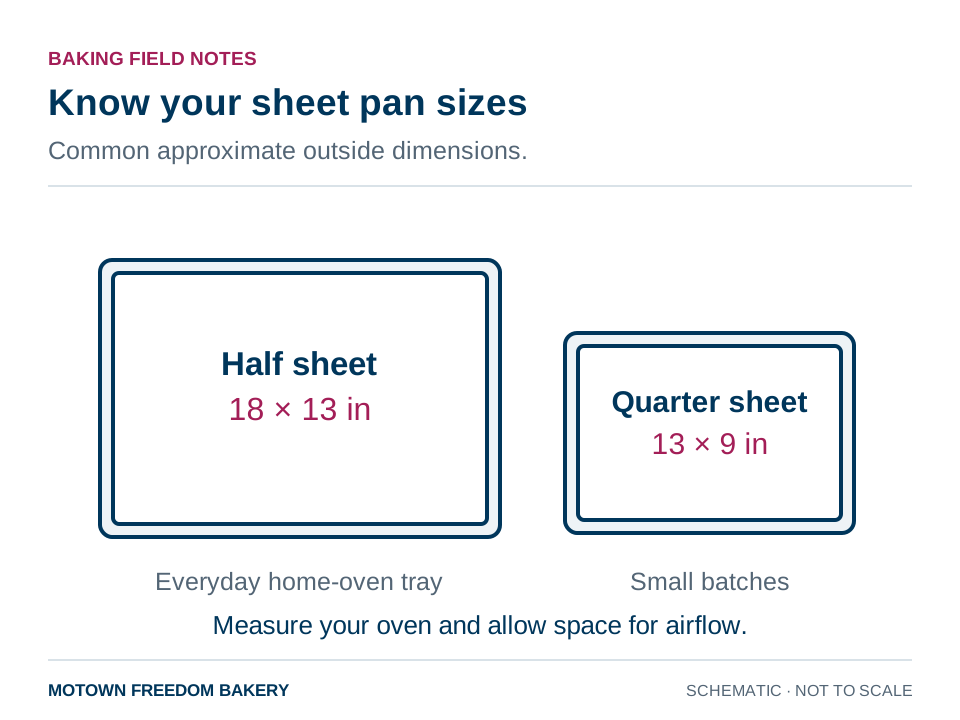
- Size. A half sheet (about 18 x 13 inches) fits a standard home oven with room for air to move. Quarter sheets (13 x 9) are handy for small batches and toaster ovens. Full sheets (26 x 18) don't fit most home ovens.
Our recommendation
- Two heavy-gauge aluminum or aluminized steel half sheets handle almost everything.
- A quarter sheet for small jobs and toasting nuts.
- Parchment paper or a silicone baking mat for release, instead of a coated sheet.
- A wire rack that fits inside a half sheet for roasting, glazing and cooling.
You can compare sheets we cover in our baking sheets and mats section. For other pans, see our guide to baking pan materials.
Frequently Asked Questions
Thin metal expands unevenly when it heats, especially if part of the sheet is covered with cold food and part is bare. Heavier-gauge sheets with reinforced rims resist it. Avoid running a hot sheet under cold water, too.
Light sheets. Dark sheets absorb more heat and can burn cookie bottoms before the tops are done. If you only have dark sheets, lower the oven by about 25°F.
Bare aluminum, stainless steel and seasoned carbon steel have no added coating. Line them with unbleached parchment for easy release.
People use the terms loosely. Strictly, a cookie sheet has no rims, or just one raised edge for gripping, while a baking sheet or sheet pan has a rim on all four sides.