Best Loaf Pan Materials
The best loaf pan material for most bakers is light-colored aluminized steel or heavy aluminum. Metal heats fast, so yeast bread gets a strong rise in the first minutes of baking and a thin, evenly browned crust, and quick breads such as banana bread bake through before their edges dry out. The USA Pan 1 lb Loaf Pan, made of aluminized steel, is the pan many bread recipes are tested in.
Glass, ceramic and cast iron each have a place, though, and the pan's size can matter even more than the material. Here's how to choose.
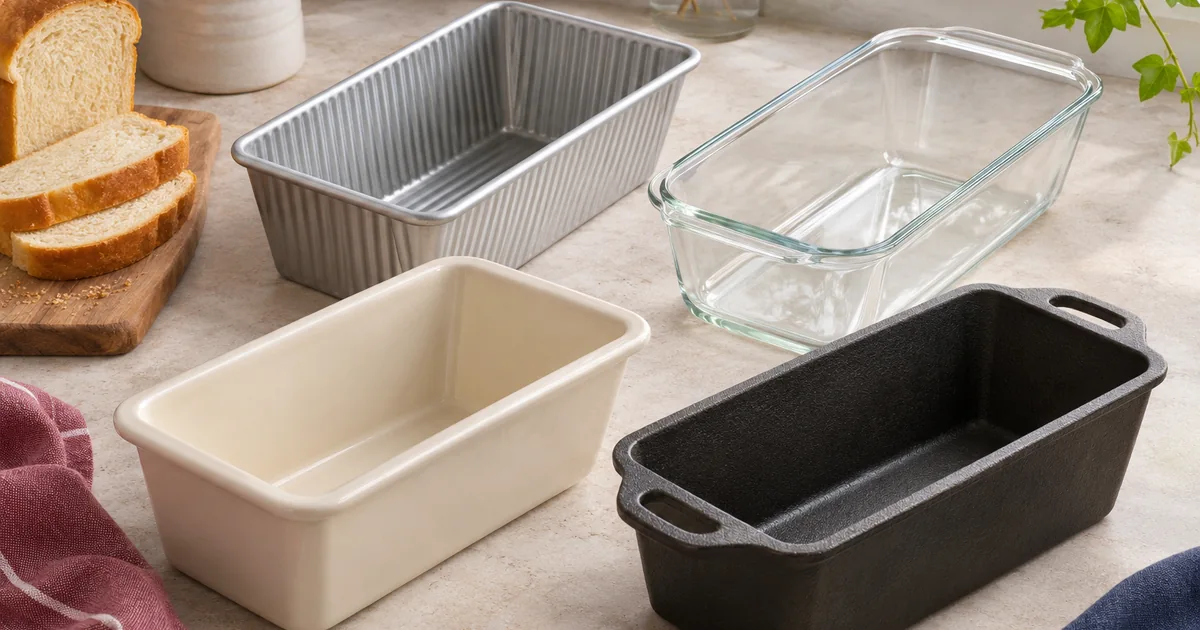
Loaf pan materials compared
| Material | Rise and crust | Browning | Release | Best for |
|---|---|---|---|---|
| Aluminized steel | Tall rise, thin even crust | Golden | Very good, often coated | Sandwich bread, quick breads, pound cake |
| Bare or anodized aluminum | Tall rise, light crust | Light golden | Good when greased | Sandwich bread, brioche |
| Dark nonstick steel | Good rise, darker crust | Dark | Very easy | Quick breads (lower the heat) |
| Glass | Slower rise, darker sides | Darker edges | Fair | Quick breads, meatloaf |
| Ceramic or stoneware | Slower, softer crust | Even | Fair | Quick breads, terrines, gifts |
| Cast iron | Strong bottom heat, thick crust | Deep | Good once seasoned | Rustic sandwich bread, cornbread |
| Stainless steel | Uneven unless clad | Patchy | Sticks unless greased | Meatloaf, uncoated preference |
| Silicone | Slow, soft sides | Pale | Excellent | Pound cake, freezing, molds |
Metal: the default for bread
Yeast dough rises most in its first 10 to 15 minutes in the oven. A metal pan reaches temperature quickly and pushes heat into the dough, so the loaf springs up before the crust sets. That's why sandwich bread recipes almost always assume a metal pan.
- Aluminized steel is stiff, doesn't warp, and usually has a release coating. Corrugated versions, such as USA Pan's ridged bottoms and sides, let air circulate and help the loaf release.
- Bare aluminum bakes just as well and has no coating, but should be hand washed and greased well.
- Pullman pans are long metal pans with a sliding lid that make square-sided sandwich loaves. They're almost always aluminized steel or aluminum.
If you use a dark nonstick pan, lower the oven by 25°F or tent the loaf with foil halfway through, or the crust gets too dark before the center is done.
Glass and ceramic: better for quick breads
Glass (such as a Pyrex loaf dish) and ceramic or stoneware (Emile Henry and Le Creuset make well-known ones) heat slowly and hold heat. For yeast bread, the slow start means a little less oven spring. For quick breads, meatloaf and pound cake, it's fine, though edges can darken before the center sets.
- Reduce the oven by 25°F compared with a metal pan recipe and expect to bake 5 to 10 minutes longer.
- Glass lets you see the color of the bottom and sides, which helps you judge doneness.
- Ceramic loaf pans look good enough for the table and make good gifts filled with a fresh loaf.
Cast iron: the crustiest loaf
A cast iron loaf pan, such as Lodge's, holds a lot of heat and gives a thick, crunchy, deeply browned crust, especially on the bottom and sides. It's great for rustic sandwich bread and cornbread. It's also heavy, and it needs seasoning so the bread releases and the pan doesn't rust.
Silicone: easy release, pale crust
Silicone loaf pans release perfectly and fold for storage, but they insulate rather than conduct. Bread browns little and the soft sides can bow outward. Set them on a baking sheet and use them for pound cakes, frozen desserts and no-bake loaves rather than yeast bread.
Size matters as much as material
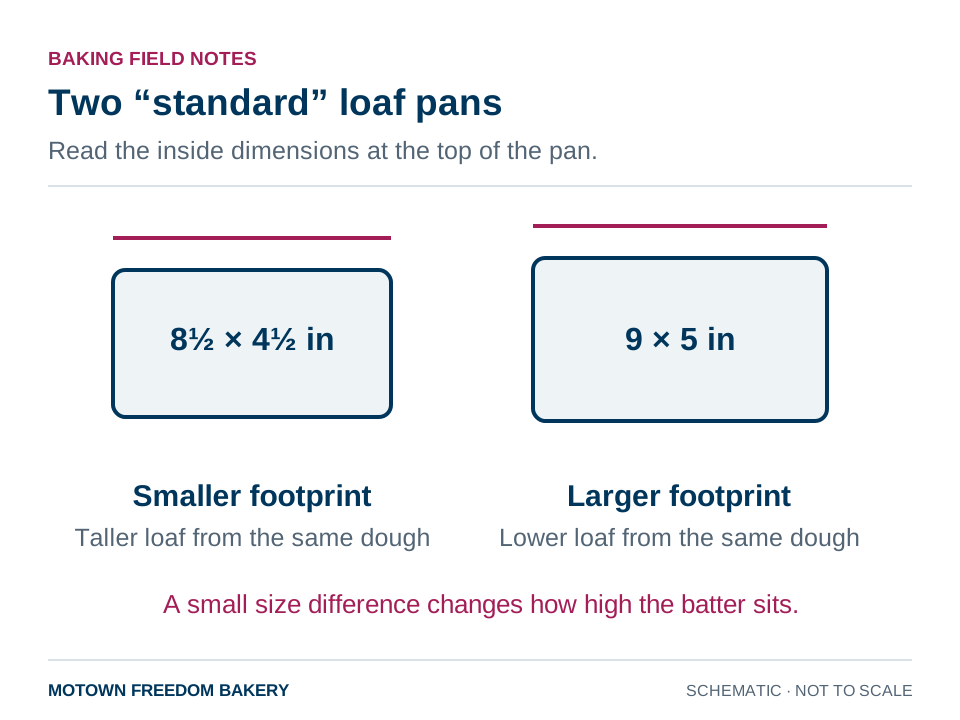
Loaf pans come in two main sizes that look almost the same:
- 8½ x 4½ inch (1 lb pan). Holds about 6 cups. Most yeast bread recipes based on about 3 cups of flour are written for it. The narrower pan pushes the dough upward into a tall, domed loaf.
- 9 x 5 inch (1½ lb pan). Holds about 8 cups. The standard for banana bread, zucchini bread and other quick breads. A yeast recipe meant for 8½ x 4½ comes out flatter in this pan.
Two other sizes are worth knowing: mini loaf pans (about 5¾ x 3 inches) for gifts and small batches, and the 13 x 4 inch Pullman pan for large square sandwich loaves.
Check the inside measurement at the top of the pan. Recipes use it, and listings sometimes give outside dimensions.
Our recommendation
Start with one or two light-colored aluminized steel 8½ x 4½ pans for bread and one 9 x 5 for quick breads. Add a Pullman pan if you bake sandwich bread often, or a cast iron pan if you love a thick crust. You can compare pans in our bread and loaf pans section, and see how other bakeware compares in our guide to baking pan materials.
Frequently Asked Questions
Metal, for yeast bread. It heats quickly for a better rise and a more even crust. Glass works for quick breads if you lower the oven temperature by 25°F.
The pan wasn't greased enough, or the loaf was left to cool in the pan too long and steamed onto it. Grease well, or line with a parchment sling, and turn the loaf out within 10 minutes.
Yes. Sourdough sandwich loaves bake well in a lidded Pullman pan or an 8½ x 4½ metal pan. You won't get the open crumb of a free-form loaf, but you'll get even slices.
Both 8½ x 4½ and 9 x 5 are called standard. Check which one your recipe uses, since the difference is about 2 cups of volume.