Best Types of Ovens for Baking
For most home bakers, the best type of oven is an electric oven with a true convection setting. Electric heat is dry and steady, which gives crisp crusts and even browning, and a convection fan with its own heating element (often called true or European convection) bakes multiple trays of cookies evenly. You can switch the fan off for delicate cakes.
Gas ovens bake well too, and countertop ovens can replace a full oven in a small home. This guide explains how each type behaves and which bakes it suits.
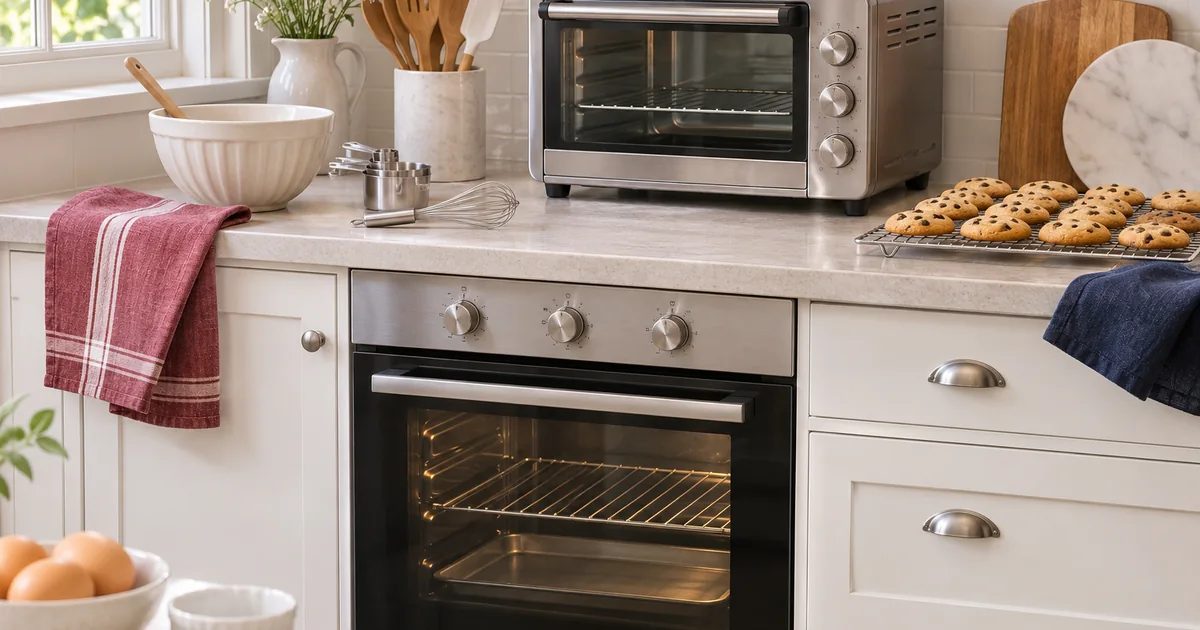
Oven types at a glance
| Type | Heat | Strengths | Weak spots | Best for |
|---|---|---|---|---|
| Electric (conventional) | Dry, steady | Even temperature, good browning | Slower to heat | Cakes, cookies, pastry, bread |
| Electric with true convection | Dry, fan-forced with a third element | Even multi-rack baking, crisper results | Can dry out delicate bakes | Cookies, pastry, roasting, bread |
| Gas | Moist, cycles more | Quick heat, moist air | Hot spots, temperature swings | Roasting, casseroles; bread with care |
| Dual fuel range | Gas cooktop, electric oven | Best of both | Costly, needs both hookups | Serious home bakers |
| Countertop convection or toaster oven | Small, fast | Quick preheat, small batches | Limited space, hot spots near elements | Small households, cookies, sheet-pan dinners |
| Steam or combi-steam oven | Moist plus dry heat | Professional bread crust, gentle reheating | Expensive, learning curve | Bread, custards, reheating |
| Pizza oven | Very hot, 700 to 900°F | Pizzeria-style crust in minutes | Mostly one job | Pizza, flatbread |
Electric ovens
Electric ovens heat with elements in the floor (bake) and ceiling (broil). They hold temperature tightly, and the air stays dry, which helps crusts and cookie edges crisp. Most bakers who have the choice prefer electric for baking.
Convection: regular vs true
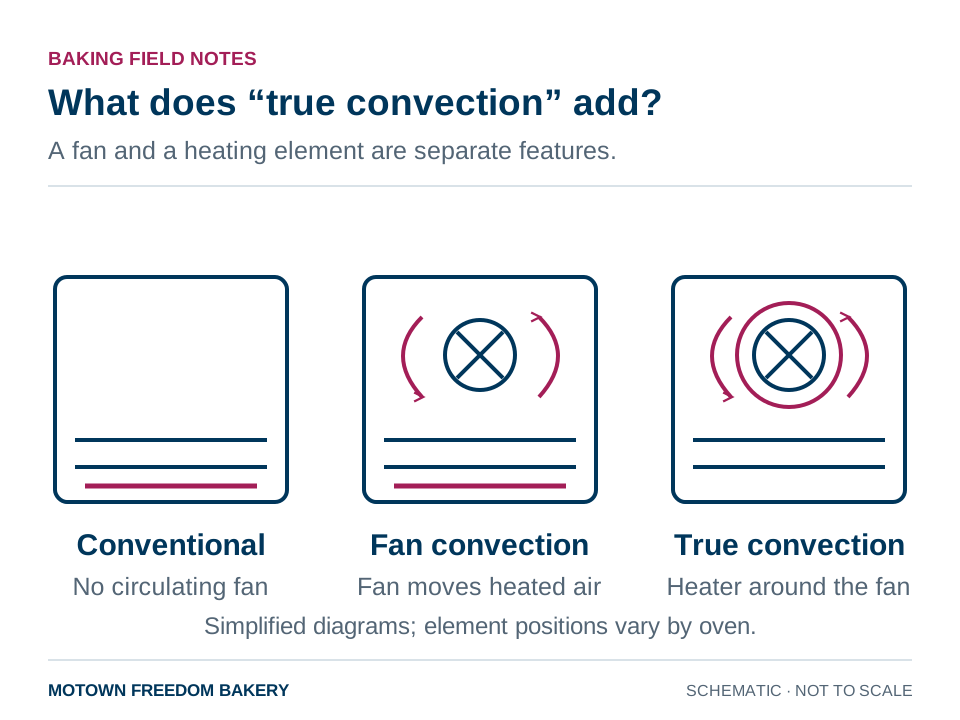
A convection oven adds a fan that moves hot air around the food. That speeds up baking, evens out hot spots, and helps several trays bake at once.
- Regular convection uses only a fan, which pushes around air heated by the bake and broil elements.
- True convection (also called European or third-element convection) puts a heating element around the fan, so the moving air is evenly heated. It's the better version for baking.
When to use it: cookies, pastry, pie crust, roasted vegetables and multi-tray baking. Lower the temperature by 25°F, or let the oven's auto-conversion do it, and check early.
When to turn it off: cakes, quick breads, soufflés, custards and cheesecakes. The moving air can set the outside too fast, causing lopsided rises, cracks and dry edges.
Gas ovens
Gas ovens heat with a burner under the floor. Burning gas produces water vapor, so the air is a little moister than in an electric oven, and the flame cycles on and off, which makes temperatures swing more. They also tend to have a hotter bottom and less even heat front to back.
Gas ovens bake well, especially roasts and casseroles. For baking:
- Rotate pans halfway through.
- Use an oven thermometer. Many ovens run hotter or cooler than the dial says.
- Bake on the middle rack, away from the hot floor, and use a baking stone on the lowest rack to steady the heat.
- For crisp bread crusts, use a Dutch oven or a stone and steam pan.
Dual fuel ranges
A dual fuel range pairs a gas cooktop with an electric oven, giving responsive burners and an oven that bakes evenly. It's the setup many keen home cooks choose, but it needs both a gas line and a 240-volt electrical outlet.
Countertop ovens
Modern countertop convection ovens bake far better than the old toaster ovens. Large models fit a 13 x 9 inch pan or a quarter sheet, heat in a few minutes, and use less energy than a full oven. The Breville Smart Oven Air Fryer Pro is a widely used example.
They suit small households and small batches. The limits: elements are close to the food, so tall cakes and breads can scorch on top, and you can only bake one tray at a time. Look for models with true convection and an interior big enough for your usual pans. Compare models in our baking appliances section.
Steam and combi-steam ovens
A steam oven injects water vapor, and a combi-steam oven combines steam with regular convection heat. Steam in the first minutes of baking lets bread expand fully before the crust sets, then a dry blast browns it, which is how bakery ovens produce glossy, crackling crusts. Steam also bakes custards and cheesecakes gently and reheats bread without drying it.
Built-in combi-steam ovens are expensive. Countertop versions, such as the Anova Precision Oven, bring the same idea to a smaller budget and footprint. Without a steam oven, you can get similar bread results with a Dutch oven; see our guide to the best size Dutch oven for bread.
Pizza ovens
Outdoor and countertop pizza ovens from brands such as Ooni and Gozney reach 700 to 900°F and bake a Neapolitan pizza in about 90 seconds. They do one job brilliantly, plus flatbreads and a few roasted dishes. They don't replace a kitchen oven for cakes or cookies.
Which oven type is best for you
- Buying a new range for baking: electric with true convection, or dual fuel if you also want a gas cooktop.
- Keeping your gas oven: add an oven thermometer and a baking stone, rotate pans, and use a Dutch oven for bread.
- Small household or no full oven: a large countertop convection oven.
- Serious bread baker: a combi-steam oven, or a Dutch oven and a stone in a regular oven.
- Pizza lover: a dedicated pizza oven, or a steel in your regular oven.
Frequently Asked Questions
Electric, for most bakers. It holds a steadier temperature with drier air, which gives more even browning and crisper crusts. Gas ovens bake well with a thermometer and regular rotation.
Usually not. The fan can set the outside of the cake too fast and cause doming or cracking. If you do, lower the temperature by 25°F and check early.
Bakeries use deck ovens with stone floors and steam injection for bread, and convection ovens for pastry, cookies and cakes.
Yes, if it's large enough. Use a small loaf or a small Dutch oven, and keep the top of the loaf a few inches below the upper element.