The 8 Best Pizza Pans of 2026

Pizza night at home usually fails in one of two places: the dough or the pan. The pan is the one nobody thinks about until the crust comes out pale and steamed instead of browned and crisp. A good one pulls heat into the dough fast, spreads it evenly, and lets a slice lift out without taking the cheese with it.

The trouble is those qualities fight each other: the nonstick that releases a slice cleanly is the same coating a pizza wheel chews up, and dark steel browns beautifully but scorches the edges. I've baked pizza at home for years, and my own pan has the scratches to prove it, so we baked in 12 of them.

Two things surprised me. Sizes lie — a pan stamped 14 inches often has noticeably less flat surface than that. And cleaning decides everything: a pan that needs a long soak is one that stays in the cabinet.

Our Top Picks

The Best Pizza Pans

1

Cuisinart 14-Inch Pizza Pan Best Overall
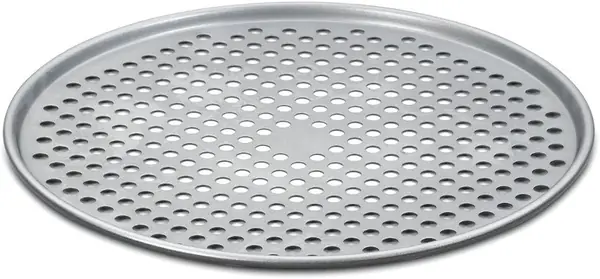
Cuisinart 14-inch round perforated nonstick pizza pan in silver, resting flat

Everyday pizza baking

Bake Score 98/100
Diameter
14 inches
Material
Aluminized steel
Care
Dishwasher safe
Surface
Perforated nonstick
View on Amazon

Holes in the bottom of a pan are not a gimmick. They let steam out from under the dough, which is the difference between a base that browns and one that sits in its own moisture and goes pale. We put the Cuisinart at the top of this list because it does that job at 14 inches, the size that fits nearly any home oven, clears a standard rack, and takes a supermarket frozen pie with a little room left over. If you want one pan for both a Tuesday-night frozen pizza and a Sunday from-scratch one, start here.

The build is the quiet part. It is heavy-gauge aluminized steel with thick rolled edges, and it sits flat on the rack without flexing when a loaded pie goes in. Rolled rims are the detail we look at first on any pan, because a cut edge is where warping starts and where a nonstick coating begins to fail. The nonstick runs inside and out, so the underside wipes clean as easily as the top.

Two things worth knowing before the first bake. A very wet dough can settle into the perforations, so dust the pan with semolina or cornmeal before you stretch the dough onto it. And cut on a board: the coating will tolerate a pizza wheel for a while, but scoring it once is the start of the flaking you do not want. Neither is a reason to look elsewhere, just part of using it well.

Fourteen inches is also its ceiling. A household that finishes a large pie and wants another should look at the 16-inch GoodCook pair instead. What keeps this one at the top is how little it asks of you: it is one of the least expensive pans here, it is dishwasher safe, and it carries a limited lifetime warranty. Nothing else in this group is this easy to live with.

Worth Noting

  • Too small for pies beyond 14 inches
Our Verdict

This is the pan we point most people to first: 14 inches fits most ovens, the holes crisp the bottom, and it releases cleanly enough that cleanup is a rinse.

Check Latest Price
2

GoodCook AirPerfect 16-Inch Pans Best for Family-Size Pizzas

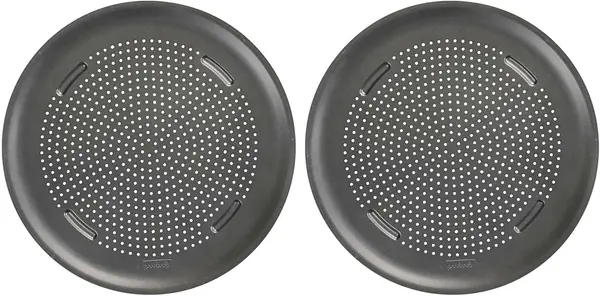
GoodCook AirPerfect 16-inch gray carbon steel pizza pan with perforated base and cutting guides

Large family pizzas

Bake Score 97/100
Diameter
15.75 inches
Material
Carbon steel
Set
2 pans
Surface
Perforated nonstick
View on Amazon

Sixteen inches is a different kind of pan. The AirPerfect's baking surface measures 15.75 inches across and about 16.5 to the outer rim, so the first thing to do is measure your oven's interior width and the rack before ordering, because a pan this wide can crowd a small cavity. What the extra inches buy is a full-size pie with a border of pan around it, and you get two of them, so a second pizza can be built while the first bakes.

The perforations and the air-insulated body do their best work on frozen pies: the crust comes out crisp rather than steamed, and leftover slices reheated on one taste closer to fresh than they do out of a microwave. We appreciated the molded feet more than we expected to. They hold the pan clear of the counter, so a hot tray can go straight down without hunting for a trivet, which is the sort of small thing you notice every single time.

Cutting guides are stamped into the surface, useful when you are dividing a pie for a crowd and do not want to eyeball the slices. Keep the wheel off the coating anyway and cut on a board. Both pans are dishwasher safe, though a quick hand wash keeps the nonstick in better shape. For a family that bakes two large pizzas at once, this is more capacity than anything else here offers.

Worth Noting

  • Can warp on a first high-heat bake
Our Verdict

We recommend these for the nights you feed a crowd: two 16-inch perforated pans crisp frozen pies, provided your oven is wide enough to take them.

Check Latest Price
3

Lloyd Pans Detroit Style Pan Best for Detroit-Style

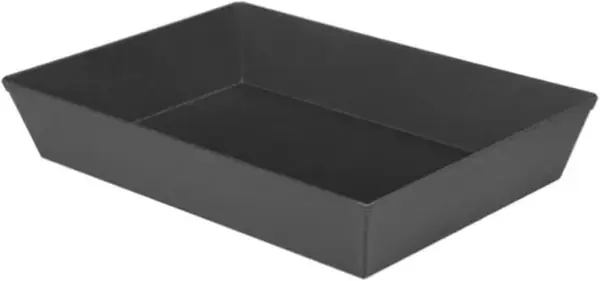
Lloyd Pans Detroit style rectangular aluminum pizza pan, dark gray, 10 by 14 inches

Detroit-style squares

Bake Score 96/100
Material
Aluminum
Care
Hand wash
Size
10 x 14 x 2.5 inches
Finish
Pre-seasoned PSTK
View on Amazon

Detroit style is a specific thing: a square-cornered slab of dough pushed out to the walls of a rectangular pan, cheese running to the edge so it fries against the metal, and a thick, airy crumb underneath. The Lloyd pan is built for exactly that, at 10 by 14 inches and 2.5 inches deep, with walls tall enough to hold a full rise and straight enough that the corners set square. It will not help you make a round pie, and it is not trying to.

The finish is the part we did not expect to care about. Lloyd's PSTK is pre-seasoned, so there is no first-use ritual, and it is rated metal-utensil safe, which means a thin spatula can run around the edge to loosen the crisp cheese ring without scoring the surface. Pizzas release with a light oiling, a tablespoon or so spread across the bottom and up the sides. It takes high heat without warping, and 500°F bakes are well within what it handles.

The catch is cost. This is the most expensive pan here, and whether it is worth it turns on how often you make Detroit style; twice a year does not justify it over the Chicago Metallic, which costs about a third as much and does a round deep dish. If square slices with lacy cheese edges are the point of your pizza nights, nothing else in this group does that. The lid is sold separately, which matters if you proof dough in the pan.

Worth Noting

  • Hand wash only
  • The priciest pan in this group
Our Verdict

We reach for this when we want Detroit squares: the 2.5-inch walls, pre-seasoned finish, and metal-safe surface make the crisp cheese edge easy.

Check Latest Price
4

Chicago Metallic Deep Dish Pan Best Deep-Dish

Chicago Metallic round deep dish pizza pan, silver carbon steel, 14 inches across

Chicago deep dish

Bake Score 95/100
Diameter
14 inches
Material
Carbon steel
Max Temp
450 °F
Depth
1.5 inches
View on Amazon

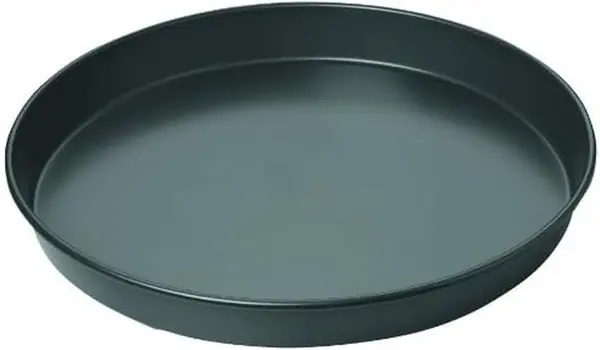
Flat pans cannot make deep dish. The whole point is a wall of dough standing up the side of the pan, holding a lake of cheese and sauce, and that needs a pan with sides. This one gives you 1.5 inches of wall around a 14-inch pan, straight rather than sloped, so the edge of the crust sets the way a Chicago pie is supposed to.

A pan this size takes more filling than we expected the first time: a full pound of cheese and a dough that climbs most of the way up the side before the sauce goes on. The technique that makes it work is oil rather than nonstick, a couple of tablespoons in the bottom so the underside of the crust fries while the oven does the rest. The silicone-based coating then releases the whole thing in one piece, and it is the rare pan here with a 25-year warranty behind it.

One limit worth knowing: it is rated to 450°F, which is a standard oven rather than a 550°F blast or a pizza oven. Against the Lloyd Detroit pan, you give up depth and a metal-safe finish and save real money. If the pizza you want is deep dish rather than Detroit squares, that is a trade worth taking.

Worth Noting

  • Oven-safe only to 450 °F
  • Hand washing recommended to protect the coating
Our Verdict

Our pick for deep dish: 1.5-inch straight walls, a slick coating, and a 14-inch footprint that turns out restaurant-style pie at home.

Check Latest Price
5

USA Pan 14-Inch Pizza Pan Best Heavy-Duty

USA Pan 14-inch aluminized steel pizza pan with corrugated nonstick surface

Heavy daily use

Bake Score 94/100
Diameter
14 inches
Material
Aluminized steel
Care
Hand wash
Surface
Corrugated nonstick
View on Amazon

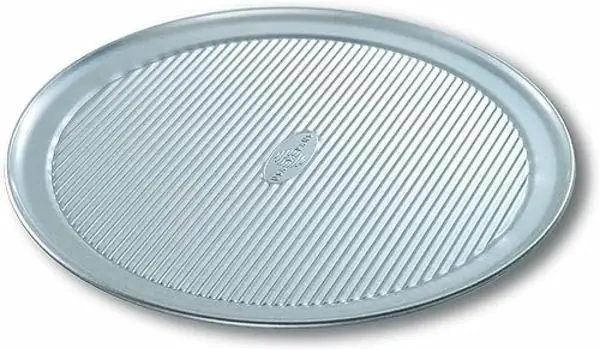
Same 14-inch diameter as our top pick, a step up in price, and a different theory of how to brown a crust. The USA Pan is commercial-gauge aluminized steel with a corrugated bottom, a grid of shallow ridges running across the surface, and that texture plus the silicone coating is what the company is selling.

The corrugations do two things we noticed. Air moves under the pan, so the base colors evenly rather than in a hot ring in the middle, and the ridges mean less flat contact where a sticky dough can grab, so a pie releases with a shove instead of a fight. It is also stiff enough that it does not flex when it is hot, which matters more than it sounds like it should when a loaded pie comes off a rack. USA Pan warns that the steel conducts heat so efficiently you may need a shorter bake or a lower setting, and we treat the first pie in a new oven as a calibration run because of it.

Two things to check before ordering. The pan is 0.5 inches deep with essentially no rim, so it is for flat pies only, and it runs big: the outer edge lands closer to 15 inches, which can foul an oven door or a tight rack. It is hand wash only, with 450°F as the ceiling. What you get for the trouble is the most solid-feeling pan in this group.

Worth Noting

  • Hand wash only
  • Outer rim runs wider than the listed 14 inches
Our Verdict

We recommend this one for daily bakers who want the most solid pan here and do not mind washing it by hand.

Check Latest Price
6

Home-Complete Cast Iron Pan Best Cast Iron

Home-Complete 14-inch black cast iron pizza pan with two loop handles

Grill and stovetop

Bake Score 93/100
Diameter
14 inches
Material
Cast iron
Max Temp
350 °F
Weight
6.7 lb
View on Amazon

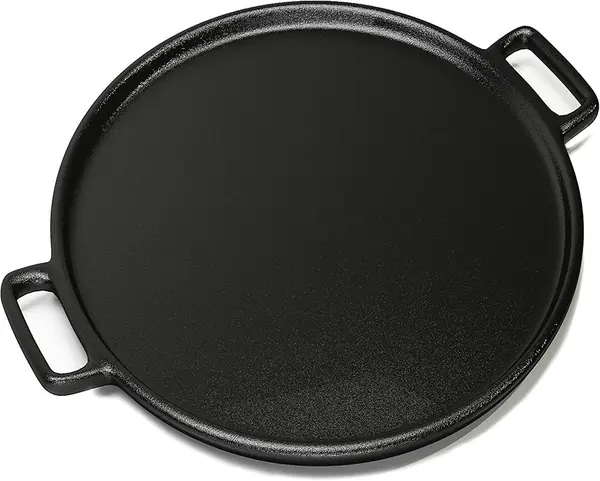
Six and a half pounds of cast iron with a handle on each side is what arrives, and that changes how you use a pizza pan. You will not flip a pie one-handed with this; you set it down, load it, and lift it with two hands and a folded towel. What the weight buys is heat retention, the thing a pizza stone has and a thin steel pan does not.

Preheat it and the surface behaves like a stone: the dough sets fast, the bottom browns, and the crust comes out crisp instead of pale in the middle. Off the oven it works as a griddle, and it goes on gas, electric, induction, a grill, or a fire, which is more surfaces than any other pan here touches.

Upkeep is the trade. It ships unseasoned, so season it before the first bake, wash it with hot water and no soap, and dry it thoroughly or it will rust. The listing also rates it to 350°F, below what a lot of pizza recipes call for, so know that a 500°F bake is outside the stated range before you plan one.

Where it earns its place is outdoors and off-label: a grill, a fire, a burner, a pan you also use for breakfast. For a dedicated indoor pizza pan the weight and the seasoning routine are friction you do not need. A 13-inch pie is the practical maximum here, which suits a household that is not feeding four teenagers.

Worth Noting

  • 6.7 pounds to lift with two hands when hot
  • Can crack during seasoning or a first hot bake
Our Verdict

We like this for cooks whose pizza happens on a grill or a burner: preheated iron browns like a stone, and the seasoning routine is the price.

Check Latest Price
7

Wilton 12-Inch Pizza Pan Set

Wilton 12-inch round nonstick steel pizza pans, gray, sold as a two-piece set

Small-batch pizza

Bake Score 92/100
Diameter
12.25 inches
Care
Hand wash
Set
2 pans
Max Temp
450 °F
View on Amazon

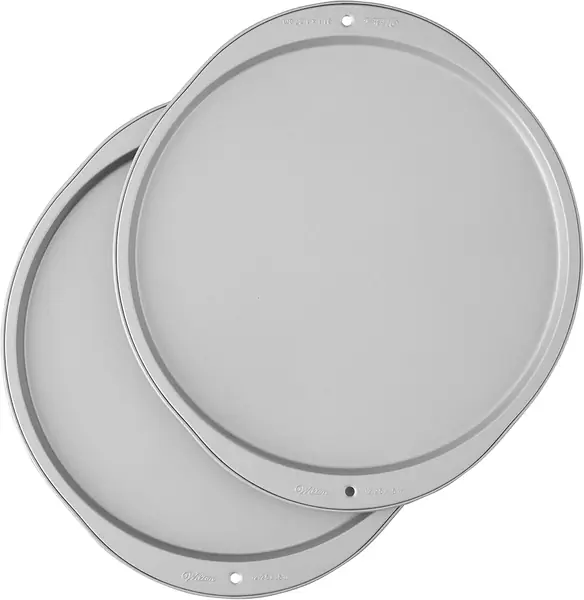
Twelve and a quarter inches is the size that fits where a 14-inch pan does not: a compact oven, a short rack, a household that bakes two medium pizzas rather than one big one. That is exactly why we kept this Wilton pair in. You get two pans in one box, so one can be in the oven while the other is being loaded, and the size is a feature rather than a compromise if you are feeding two people instead of five.

The coating does what it should. Pizzas slide off, the pans hand wash in a minute, and the surface has held up under a pizza wheel better than we expected given how light they feel. These are working pans rather than heirlooms, though: the surface can stain and take on rust spots when it is left wet or run through the dishwasher, so wash and dry by hand and keep the cutter off the coating. They are rated to 450°F and carry a five-year replacement warranty.

Worth Noting

  • Coating stains and can spot with rust
  • Twelve inches is small for family pies
Our Verdict

We recommend this pair for small ovens and two-person pizza nights: the nonstick releases cleanly, and hand washing keeps it that way.

Check Latest Price
8

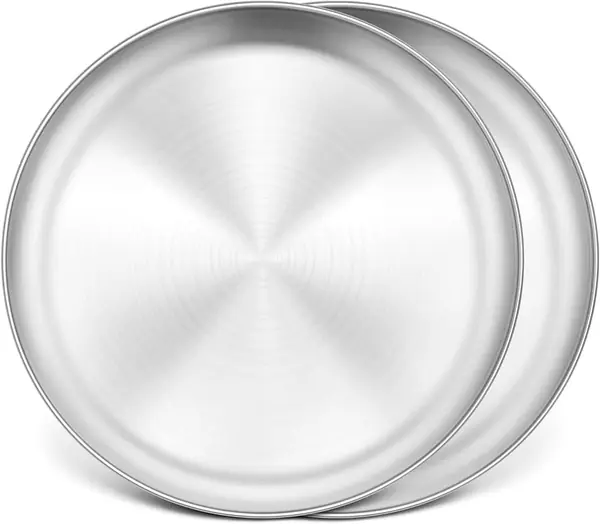
P&P CHEF Stainless Steel Pan Set Best for Coating-Free Baking

P&P CHEF 13.5-inch round stainless steel pizza trays with brushed silver finish, set of two

Coating-free baking

Bake Score 91/100
Diameter
13.5 inches
Material
Stainless steel
Care
Dishwasher safe
Set
2 pans
View on Amazon

Every coated pan here eventually loses its coating; that is the nature of the thing. This set sidesteps the question entirely, with two 13.5-inch trays in bare stainless steel, nothing to flake, nothing to scratch off into a pie, and no seasoning to maintain. If you have had a nonstick pan shed into dinner, that is the reason to read this card carefully.

Bare steel has a cost, and it is release. Dough dropped onto a dry stainless tray will grab. Grease the pan, with oil, a rub of butter, or a dusting of cornmeal, or lay a sheet of parchment under the dough, and the same pan turns into a clean release. The gently sloped rim helps here, because it lets a spatula or a peel slide under the edge without fighting a straight wall.

Where the set earns its keep is abuse. Stainless takes a pizza wheel, a metal spatula, and the dishwasher without complaint, and the brushed finish hides the scratches a cutter leaves. At 0.8 inches deep with sloped sides, they also work for roasting vegetables, sheet-pan dinners, and reheating leftovers. These are the pans you leave in the oven because they never need babying.

Fair warning on appearance: stainless discolors. Run these through a hot dishwasher or put one on a grill and you will get a permanent bronze tint that changes nothing about how they bake. That is cosmetic, and it is the price of a pan with no coating to fail. As a pair of everyday trays for someone who cooks pizza weekly and would rather not think about coating care, this is the low-drama choice here.

Worth Noting

  • Dough sticks without oil or parchment
  • Discolors with dishwasher or grill use
Our Verdict

We keep this set in for anyone done with coatings: bare stainless cannot flake into a pie, and oil or parchment solves the release.

Check Latest Price

How We Tested Pizza Pans

We started with more than 40 pans and narrowed them by material, listed diameter, oven-safe temperature, whether they were sold singly or as a set, and price. That left 12 pans — nonstick, carbon steel, aluminized steel, stainless, and cast iron — which we baked in for eight months.

Every pan got the same rotation: a Friday night cheese pie, a reheated-slice test, and a deep-dish or Detroit-style bake on weekends. We measured the flat interior with a tape measure and laid a 12-inch stretched round on each one to see how much room was actually left for crust. Pans went into a 500-degree oven on the center rack, and we noted where the browning landed — even from edge to center, or a pale middle with a scorched rim. After the first preheat we checked each one against a straight edge to see whether it had warped.

For release and durability, we cut every pie with a wheel and, on a few, a metal spatula, then looked at the surface under a bright light for scratches. We scrubbed half the pans with nylon and ran the rest through the dishwasher to see which ones dulled, chipped, or blistered at the rim. Cleaning was timed from the moment a pan cooled: a 10-minute soak, then a sponge, and we logged whatever crust didn't budge.

Value came down to what you get per pan — several of these are sold in pairs, and the per-pan math changed the ranking more than once. The pans that scored highest did three things without drama: fit the dough we made, browned the bottom before the cheese dried out, and wiped clean.

How to Choose a Pizza Pan

Pick the style before the pan

A perforated round pan is the default for thin and frozen pizza: the holes let steam escape and the base crisps. A solid round pan holds a heavy load of toppings without flexing. Deep dish needs walls, about 1.5 inches for a Chicago-style pie and more if you want a tall one, while Detroit style needs a rectangle with straight sides so the cheese can fry against the metal. Cast iron does the flat-pan job and adds a grill and a stovetop.

Buy one pan for the pizza you make most often rather than three for the ones you might. A second style is worth adding once the first one has earned its cabinet space.

Measure the oven, not just the pan

Pan sizes are nominal. A pan sold as 14 inches can measure closer to 15 across the rim, and a 16-inch pan with a 16.5-inch outer edge is a different proposition in a compact oven. Measure the interior width, check the rack, and think about the door: a tray that fouls the glass when it swings shut is one you will stop reaching for.

Most frozen pizzas run about 12 inches, so a 14-inch pan covers them with room around the edge. Anything wider is about feeding more people, not about fitting the pizza.

Coated or bare: decide with your utensils

Nonstick gives the easiest release and the shortest-lived surface. Cut on it, run it through the dishwasher, or stack it under a heavier pan and the coating starts to go. Bare stainless asks for oil or parchment in return for shrugging off a pizza wheel and a dishwasher cycle. Cast iron wants seasoning and dry storage but will outlast everything else here.

If you cut pizza in the pan, which most of us do, choose bare metal or a PSTK finish, or accept that a coated pan will need replacing before a bare one does.

Match the temperature rating to your hottest bake

Most coated pans here are rated to 450°F. That covers standard recipes but not a 550°F blast or a dedicated pizza oven, and the PSTK pans go considerably higher. Check the number before you plan a high-heat bake, and remember that the rating is a ceiling, not a suggestion that the coating enjoys living there; a pan used at its limit every week will wear faster.

One more thing to watch with a perforated pan: flour and cornmeal sift through onto the oven floor, so slide a sheet pan underneath if you use a lot of bench flour.

Cleaning decides how long it lasts

Hand washing is the single biggest thing you can do for a nonstick pan, which is why the dishwasher-safe label on a coated pan is worth reading twice; several pans here claim it and then recommend hand washing in the next breath. Rolled rims resist warping better than cut edges, and thin steel flexes and pops when it hits a hot oven.

Staining on stainless steel and cast iron is cosmetic and not a fault. A bronze tint after a dishwasher cycle does not change how the pan bakes.

Frequently Asked Questions

Final Verdict

The Cuisinart 14-inch is the pan we point most people toward first. Fourteen inches fits nearly every home oven, the perforations dry the bottom for a crisp crust, and it releases cleanly enough that cleanup is a rinse. It is the least complicated way to improve pizza night.

Change the pick when the pizza changes. Take the GoodCook pair if you routinely bake large pies for a crowd, the Chicago Metallic if deep dish is the goal, or the Lloyd pan if you want Detroit squares with fried cheese edges. If your pizza cooking happens outdoors more often than not, the cast iron pan is the one to carry out.