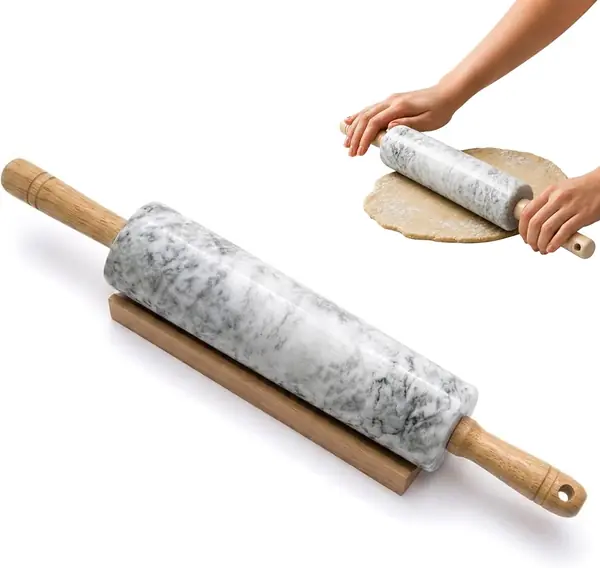
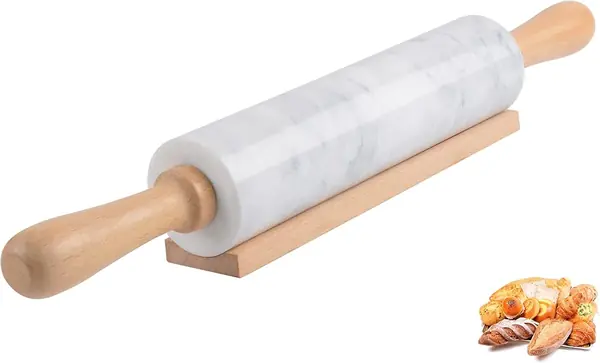
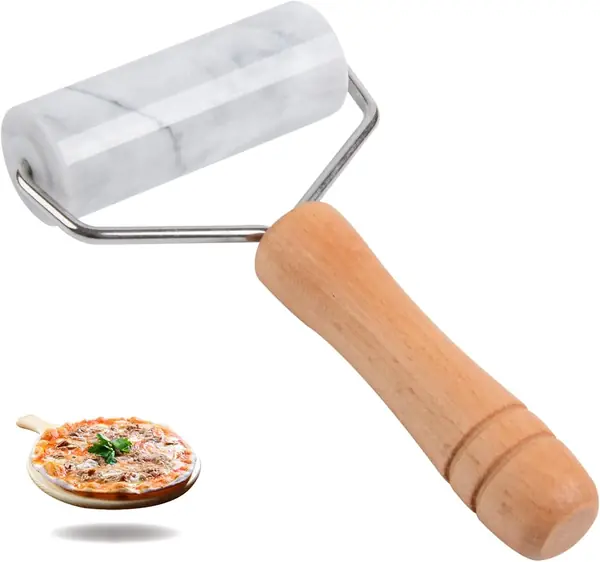
The 7 Best Marble Rolling Pins of 2026

A marble rolling pin is heavy on purpose. The weight does the pressing, so you can roll a pie crust with a light hand and keep the butter cold enough to stay in flaky layers instead of smearing into the flour. It's also why a poorly made one is genuinely unpleasant: too heavy and your wrist pays, too light and it skates, too rough and the dough sticks no matter how much flour you add.

I rolled dough with a wooden pin for years before marble made the difference obvious. We rolled with 14 pins — handled, handleless French styles and small ones for single crusts — and the keepers all shared a cool, glass-smooth barrel and enough mass to flatten stiff dough without leaning on it. The detail shoppers overlook is the cradle: a marble pin rolls, and one that rolls off the counter usually loses a corner.

Handles are the other fork in the road, and neither answer is wrong.

Our Top Picks

The Best Marble Rolling Pins

1

Zulay Kitchen 17-Inch Marble Rolling Pin with Stand Best Overall
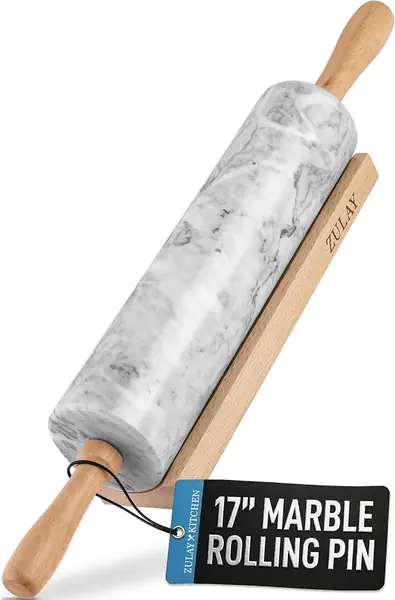
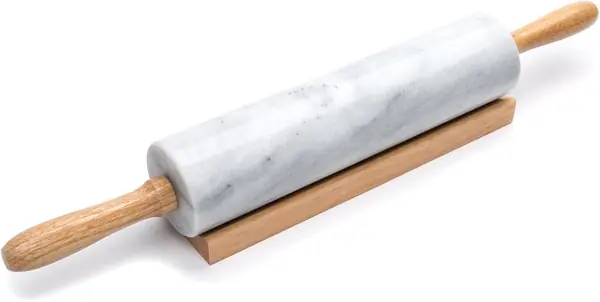
Zulay Kitchen 17-inch white marble rolling pin with beechwood handles resting in its wooden stand

Everyday dough rolling

Bake Score 96/100
Overall Length
17 inches
Barrel Diameter
2 inches
Included
Wooden stand
Handle Material
Beechwood
View on Amazon

Chill this pin in the refrigerator for half an hour before you roll pie dough and it turns into a different tool: the cold stone keeps the butter firm, the dough releases in one piece, and you need far less bench flour than wood demands. Any marble pin benefits from that trick, but this is the one we kept reaching for. A 17-inch pin with heavy polished stone and free-spinning beechwood handles covers a full crust in a handful of passes, and it sits at the bottom of the price range for full-size pins here.

The barrel measures 2 inches across, slimmer than the 2.4- and 2.5-inch pins in this group. You trade a little coverage per pass for control at the edges, which we noticed most on a round of dough that filled the board. The 360-degree bearings let the marble spin while your hands stay put, and the wooden stand means you can set it down mid-roll without a heavy stone cylinder wandering toward the edge of the counter.

Weight is the honest caveat. Marble this heavy flattens dough for you, but you still lift it, and a baker with sore wrists will feel it by the second batch. The 12-inch Fox Run French pin below weighs about half as much and asks more of your arms in return. For everyone else, this is the pin that makes rolling feel like less work than it used to.

The stand is the small thing we ended up appreciating most: with the pin resting in it between passes, there's no juggling a heavy barrel and a flour-dusted counter at the same time. Ours has stayed glossy with a damp cloth and a dry towel, and it lives on the counter rather than in a drawer.

Worth Noting

  • Marble veining varies, so yours won't match the photos
Our Verdict

It's the marble pin we recommend first: heavy enough to flatten cold butter dough with almost no pressure, smooth enough to wipe clean, and the least expensive of the full-size pins here.

Check Latest Price
2

CHEFMADE 18-Inch Marble Rolling Pin with Cradle Best for Laminated Dough and Pastry

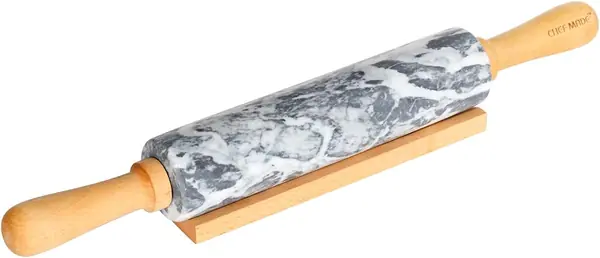
CHEFMADE 18-inch gray and white marble rolling pin with wooden handles and matching cradle

Laminated pastry dough

Bake Score 95/100
Overall Length
18 inches
Weight
4.6 lb
Bearings
Nylon bushings
Barrel Diameter
2.4 inches
View on Amazon

Set this pin next to the Zulay and the differences are the ones you pay for: a wider 2.4-inch barrel, a glossier gray-and-white stone, and a matching wooden cradle rather than a plain stand. It runs 18 inches end to end and weighs 4.6 pounds, so it's a substantial object on the counter — the pin in this group most likely to be left out on display rather than tucked away.

We reached for it whenever we were rolling laminated dough or a tart shell. The nylon bushings turn without a catch, the 4.6 pounds does the flattening, and that combination lets you keep your hands light on the handles instead of leaning into the pin, which is exactly what you want when there are butter layers to protect. If pastry is the reason you're buying a marble pin, this is the one we point you to.

The trade-offs are straightforward. It's the priciest handled pin in this group, and the finish that makes it handsome is also the reason it's hand wash only: no dishwasher, no soaking, and a dry towel straight after. At 18 inches it wants a deep drawer or a spot on the counter, and the cradle handles the second option nicely.

Worth Noting

  • Hand wash only, and the wooden cradle must stay dry
  • The priciest handled pin in this group
Our Verdict

We recommend the CHEFMADE for anyone who rolls pastry often and wants the best-finished pin here: the wide barrel and smooth bushings make short work of laminated dough.

Check Latest Price
3

Fox Run Marble French Rolling Pin and Base Best Handle-Free Design

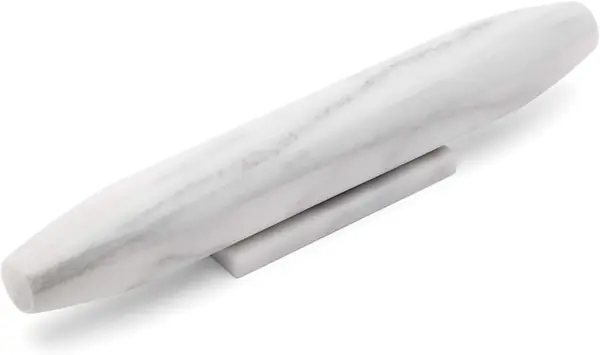
Fox Run 12-inch white marble French rolling pin, tapered and handle-free, on its marble base

Rolling by feel

Bake Score 94/100
Overall Length
12 inches
Weight
2.6 lb
Barrel Diameter
2 inches
Style
Tapered, no handles
View on Amazon

There are no handles, and that's the point. A French pin puts your palms straight on the stone, so you feel the dough's thickness through your hands and can lean on one end harder than the other. At 12 inches and 2.6 pounds, this is the lightest full-size pin here, and we keep it for pie crust and for any dough where feel matters more than force.

The tapered shape is what makes it useful beyond pastry. Because there's nothing between your hands and the edge of the dough, you can roll almost to the rim of a tart pan, and the narrow ends press into corners a straight barrel can't reach. The trade is muscle: the marble contributes less than the 4.5- and 4.6-pound pins, so a stiff cookie dough takes more of your own pressure and you notice it by the third batch.

One thing to know before you buy. The marble resting base is the fragile piece in this set, so check it when the box arrives and keep the pin on the base rather than loose on the counter. What the pin gives you in return is the smallest footprint of any full-size model here, which counts for something in a kitchen where drawer space is already spoken for.

Worth Noting

  • Short 12-inch barrel limits wide dough sheets
Our Verdict

We recommend the Fox Run French pin to bakers who roll by feel or find a five-pound barrel tiring: it's light, responsive, and steers into places a handled pin can't.

Check Latest Price
4

Fox Run 10-Inch Marble Rolling Pin with Cradle Best for Small Batches

Fox Run polished white marble rolling pin with wooden handles in a fitted wooden cradle

Small batches

Bake Score 93/100
Overall Length
18 inches
Bearings
Nylon ball bearings
Included
Wooden cradle
Barrel Length
10 inches
View on Amazon

Ten inches of polished white marble, wooden knobs on nylon bearings, and a cradle cut to match the barrel. This is the marble rolling pin most people picture when they picture one. The whole thing runs 18 inches with the handles, and the barrel is thicker than the Zulay's at 2.5 inches across.

The shorter barrel is the reason to choose it over a bigger pin. On a small board, 10 inches of marble is easier to steer than 17 or 18, and you can feel where the ends are without looking down. We also like that the cradle is fitted rather than a pair of rails: the pin sits down into it and stays put between passes.

Where this pin gives out is the hardware. A wooden knob that works loose or snaps leaves you holding a stone barrel with nothing to grip, so lift it by the marble and set it back in the cradle instead of levering it up by a handle. The polished surface itself cleans up with a wipe, and the white stone is genuinely handsome in a plain, unshowy way.

Worth Noting

  • Only a 10-inch barrel, so wide dough needs more passes
Our Verdict

We recommend it for small kitchens and small batches: the 10-inch barrel is easy to steer, the cradle keeps a heavy pin safe, and it costs less than most full-size pins here.

Check Latest Price
5

Farberware Marble Rolling Pin with Wooden Stand Best for Everyday Baking

Farberware marble rolling pin with rubberwood handles sitting upright in its wooden stand

Everyday baking

Bake Score 92/100
Overall Length
17.72 inches
Weight
4.6 lb
Barrel Diameter
2.36 inches
Handle Material
Rubberwood
View on Amazon

We expected a mass-market name to feel like a compromise, and this one doesn't. The roller spins on rustproof bearings, the rubberwood handles are shaped to sit in your palm instead of poking at it, and at 17.72 inches end to end there's room to hold them at the ends or choke up.

For everyday cookie and biscuit dough it does what the pricier pins here do. The 4.6 pounds presses evenly without requiring a shove, the 2.36-inch barrel is the middle of the road in this group, wide enough to cover ground and narrow enough to control, and the wooden stand keeps it upright so it isn't rolling around between batches.

What we appreciate most is how unremarkable it is in the hand: no wobble, no rattle, just a smooth turn and a weight that reads as solid rather than heavy. The caveat is the wood. Handles that loosen and wood that splinters are the two ways this pin ages, and both are worse when it stays wet, so wash the barrel and wipe the handles dry rather than soaking the whole thing. Treat it that way and it's a lot of pin for the price.

Worth Noting

  • Nearly 18 inches long, so drawer storage is tight
Our Verdict

We recommend it to anyone who wants a full-size marble barrel with comfortable handles and a stand, and who is willing to keep the wood dry.

Check Latest Price
6

SIPARUI 18.5-Inch Marble Rolling Pin with Cradle Best for Wide Sheets

SIPARUI 18.5-inch white marble rolling pin with long wooden handles and a wooden base

Wide sheets

Bake Score 91/100
Overall Length
18.5 inches
Weight
4.5 lb
Bearings
Stainless steel
Barrel Length
9.84 inches
View on Amazon

18.5 inches end to end, with 9.84 of them marble and the rest wooden handle. That ratio is the reason to consider this pin: your hands sit well clear of the dough, so a wide sheet doesn't put your knuckles in the flour, and you can keep both hands at the ends where you have the most leverage.

The hardware is a step up from the nylon bushings on most of this group. Stainless steel bearings run quietly and freely, and a rubber ring sits where each handle meets the marble so the two aren't grinding against each other as the barrel spins. At 4.5 pounds it flattens cold dough without a shove, and the 2.36-inch barrel is the same middle-of-the-road width as the Farberware.

Check the fit when it arrives. A handle that sits slightly off-center makes the barrel wobble and sends the pin tracking crooked, and that's easier to catch before the first bake than after it. The wooden base is cut to the barrel at 9.84 by 1.77 inches, so the pin sits down into it without rocking.

Where it earns its place for us is batch work: two trays of crackers, a round of tortillas, a wide sheet of pizza dough, all of which go faster when your hands aren't crowding the dough. The steel bearings and the extra reach are what the mid-range price buys, and neither has an equivalent in this group.

Worth Noting

  • 18.5-inch span needs clear counter at both ends
Our Verdict

We recommend the SIPARUI to anyone rolling wide dough: the long handles keep your hands out of the flour and the steel bearings turn more freely than the nylon ones here.

Check Latest Price
7

Tianman Small Marble Dough Roller, 4.5-Inch

Tianman small white marble dough roller with a T-shaped wooden handle for pan pizza

Pan pizza

Bake Score 90/100
Overall Length
7.28 inches
Bearings
Nylon bushings
Handle
Beech T-handle
Roller Width
4.5 inches
View on Amazon

A rimmed pizza pan is the test this little roller was built for: 4.5 inches of marble on a beech T-handle short enough that you can press dough out to the lip without the handle clouting the rim. Nothing else here can do that.

It's a supplement rather than a replacement, and it's good at the jobs that suit: a single tortilla, a small round of pastry, a quick patch on a sheet of dough, or crackers when you don't want to haul the big barrel out of the drawer. The T-handle keeps your knuckles off the dough, and it's light enough that a child helping with cookies can steer it.

What it won't do is a pie crust or a full sheet of laminated dough. At 4.5 inches the roller covers little ground, so a large round takes a lot of passes and comes out uneven unless you work in quarters and stay patient. That's the honest boundary, and it's why ours lives in the drawer next to the measuring cups rather than on the counter with the big pins.

Worth Noting

  • No stand to rest it on between uses
Our Verdict

We recommend it as a second pin for pan pizza, tortillas, and small pastry. It reaches where a full-size barrel can't, but it isn't a substitute for one.

Check Latest Price

How We Tested Marble Rolling Pins

We started with a shortlist of about 40 pins pulled from retailer listings and baking forums, then narrowed it by the things that actually separate them: barrel length and diameter, whether a cradle came with it, handle style, and how the marble was finished. Anything with a pattern of complaints about rough edges, loose handles, or a pin that arrived chipped was dropped before we ordered. That left 14 pins, which we baked with for six months.

Testing happened in our own kitchens on real baking days — Saturday morning pie crusts, Thursday night pizza dough, a run of holiday cookies, and small batches of tortillas and fondant for the short pins. We chilled every marble barrel in the fridge for 30 minutes before rolling, then noted whether dough stuck, whether it took one swipe of flour or five to release, and whether the barrel spun freely in its handles or wobbled.

Weight got judged at the end of a batch rather than on a scale: were our wrists tired after ten minutes of rolling, and could we still keep a light touch on stiff dough? We also set each pin in its cradle and gave the counter a nudge to see whether it stayed put.

For durability, every pin went through repeated washing and drying — marble and sudden temperature swings are not friends — and we checked rims and handles for chips, cracks, and loosening. Finally, we looked at what buyers notice first: even veining, a polish with no dull patches, a stand that matched the barrel it came with, and whether the finish and hardware justified what the pin cost. The pins below still look and roll like they did in week one.

How to Choose a Marble Rolling Pin

How Much Weight You Want the Stone to Do

The full-size pins in this group run from about 4.5 to 5 pounds, and that mass is the reason to own one: a heavy barrel flattens cold butter dough with almost no downward pressure from you. You also carry it, lift it, and set it down for every batch. If your wrists or shoulders complain, the 12-inch Fox Run French pin weighs 2.6 pounds and asks for more of your own muscle instead.

Don't assume heavier is automatically better. A five-pound pin on a small board with a small round of dough is awkward rather than efficient, and heavy stone left loose on a counter will eventually find the floor. Weight only pays off when the barrel is wide enough to use it and the pin has a cradle to sit in.

Handles, Bushings, and the French Option

Most marble pins here join wooden handles to the barrel through nylon or stainless steel bushings, and that joint is where a pin usually fails first. A handle that wobbles out of the box is a return, not something to live with. Stainless steel turns more freely than nylon, and a rubber ring at the joint keeps wood from grinding against stone.

The other design has no handles at all. A tapered French pin is rolled with your palms on the stone, which gives you more feel for thickness and lets you lean harder on one end than the other. It's the better choice if you have a light hand and the wrong one if you want the stone to do the pressing.

Reading the Length: Barrel First, Then Overall

Listings quote overall length with the handles included, so two pins of the same length can carry very different amounts of marble. Most of the handled pins here put a 10-inch barrel inside an 18-inch package, which covers a pie crust comfortably and a wide sheet only with patience. More marble means fewer passes; less marble means easier steering on a small board and a pin that drops into a shallow drawer.

Measure two things before you buy: the drawer or counter spot the pin will live in, and the widest dough you actually roll. If the answer is a big round or a slab of laminated pastry, take the longest barrel you have room for and let the cradle hold it out on the counter.

Why Marble Releases Dough, and When It Doesn't

Polished marble is non-porous and stays cool, which is why dough releases from it with less flour than a wooden pin needs. Temperature matters as much as polish: chill the pin for half an hour before pastry and it keeps butter firm instead of smearing it. Roll soft dough on a warm pin and you'll still be reaching for the flour canister.

That's also why marble suits pastry better than bread. Yeasted dough that you want to relax and stretch rewards a lighter, warmer pin with more give, while pie crust, biscuits, and laminated dough reward cold stone. Buy for the dough you make most often.

Frequently Asked Questions

Final Verdict

For most bakers, the Zulay 17-inch pin is the one to buy. It's heavy enough to flatten cold dough without effort, its handles spin freely, it wipes clean, and it costs less than the other full-size pins here. If you roll laminated pastry regularly and want the best-finished pin in the group, the CHEFMADE is worth the step up.

And if a five-pound barrel tires your hands, go the other way: the Fox Run French pin is 12 inches, 2.6 pounds, and rolled entirely by feel.