The 2 Best Horizontal Bread Machines of 2026

Horizontal bread machines trade a little counter width for a loaf that looks and slices like the bread I actually want to eat. The paddles knead and bake in a wide, low pan, so you get a sandwich-shaped loaf instead of a tall cylinder with a hole in the bottom—one that fits a toaster and stacks in a lunch bag. The wide base also stays put during kneading, which matters more than I expected.

I have been baking at home for years, and the failures are rarely dramatic: a loaf that rises unevenly, a crust that tastes stale by day two, a pan that is miserable to scrub. We've baked with 12 horizontal machines, from weekday white loaves to gluten-free mixes, and the differences in reliability and cleanup add up fast. A machine can have every preset and still turn out a gummy center; both of our picks made a good loaf repeatedly, without a fight.

Our Top Picks

The Best Horizontal Bread Machines

1

Zojirushi Home Bakery Supreme Best Overall
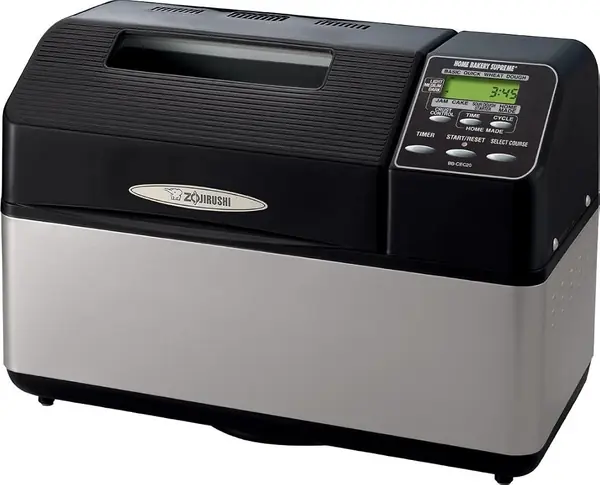
Zojirushi Home Bakery Supreme black bread maker with rectangular pan and digital control panel

Everyday horizontal loaves

Bake Score 89/100
Pan
Nonstick horizontal rectangular
Capacity
2 lb
Programs
10
Delay Timer
13 hours
View on Amazon

A horizontal loaf is the reason to look at the Home Bakery Supreme. The rectangular pan turns out a 2-pound loaf shaped like standard sandwich bread, not a tall block with a small slice. The control panel is deliberately simple: 10 programs, a 13-hour delay timer, and separate settings for cake, jam, dough, and sourdough starter. We recommend it because it gets the shape right without asking you to learn a complicated menu.

The trade-off is physical. At 19.5 pounds and 16.87 inches wide, it takes up a serious strip of counter and is not a machine you will move for every bake. We left it in place after the first loaf; the weight makes it feel planted during kneading, but shifting it is a two-hand job. Measure your counter and leave room for the lid to open and the pan to slide out.

The machine is easy to live with: the nonstick pan releases the loaf cleanly, the controls are uncomplicated, and the simple design has less to go wrong. It is a premium machine, but it earns the money with a dependable, uncomplicated bake.

Worth Noting

  • No automatic fruit or nut dispenser
Our Verdict

We recommend the Zojirushi Home Bakery Supreme for anyone who wants a reliably horizontal, rectangular loaf and values simple controls over a long menu.

Check Latest Price
2

Briskind 2-Pound Bread Maker Best Program Variety

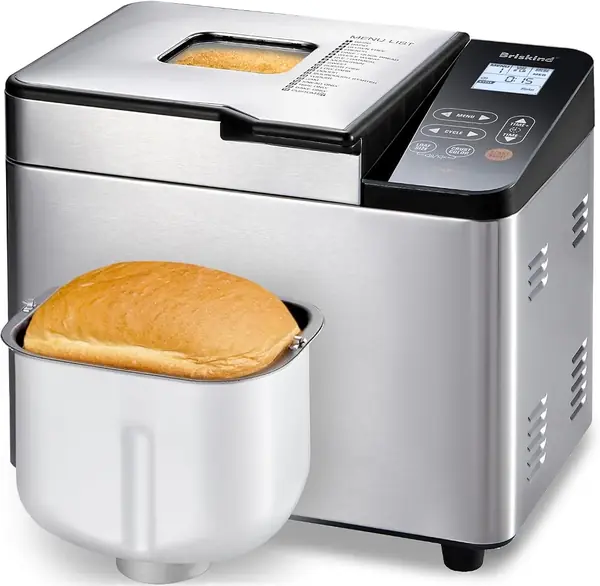
Briskind stainless steel horizontal bread maker with glass touch panel and ceramic pan

Quiet program variety

Bake Score 85/100
Pan
Ceramic nonstick horizontal
Capacity
2 lb
Programs
19
Delay Timer
15 hours
View on Amazon

The Briskind is the bread maker to choose when a horizontal loaf and a ceramic pan matter more than a stripped-down control panel. Its 19 programs cover the usual white, whole wheat, gluten-free, dough, and jam cycles, plus custom menus, and the 15-hour delay makes overnight baking easy. The horizontal pan is explicit here, so you know what shape you are getting before you unbox it.

The pan is the fussy part, but it rewards a little care. It can take a firm push to seat and a steady pull to remove; check that it is locked before you press start. The ceramic surface needs silicone or wooden tools and hand washing, not a dishwasher. In return, the loaf releases cleanly and the pan wipes down without scrubbing. We kept the manual handy for the custom menu, though the everyday cycles are easy enough to set without it.

In use, the machine is quiet enough to leave on the counter while you work. It is also the easier of the two to fit into a smaller kitchen: the body is 13.8 inches wide, against 16.87 inches for the Zojirushi. The one-hour keep-warm is useful if breakfast runs late, but do not leave the loaf in much longer than that or the crust softens.

Worth Noting

  • Topped out at a 2-pound loaf
Our Verdict

The Briskind earns our nod for bakers who want a horizontal ceramic pan, a broad program menu, and quieter baking in a smaller footprint.

Check Latest Price

How We Tested Horizontal Bread Machines

We began by reading reviews and spec sheets, then narrowed the field to 12 horizontal machines with dough and jam settings, timers, and loaf-size choices. Over eight months, I baked at least three loaves in each: a basic white, a whole-wheat, and a gluten-free mix, plus dough and jam cycles on the models that offered them. I weighed ingredients, used the delay timer overnight, and noted whether the loaf rose evenly or slumped at one end. Taste mattered as much as looks—I sliced each loaf after cooling, ate it plain and toasted on day two, and checked whether the crust stayed pleasant or turned leathery.

Ease of use got tested at 6 a.m., when I was half awake: how many button presses to start a loaf, whether the display was readable without glasses, and whether the pan locked in without fiddling. For cleanup, I hand-washed the pan and paddle after every bake and noted where dough stuck. I listened from the next room during kneading, nudged the machines to check stability, and kept a running log of any inconsistent loaves or mechanical hiccups. After months of repeated use, I compared what each machine cost against how often it turned out a loaf I wanted to finish—and which ones still felt solid rather than loose or scratched.

How to Choose a Horizontal Bread Machine

Check the Pan Before the Program Count

A horizontal bread machine is defined by its pan, not by a label on the box. Look for a rectangular pan or a listed rectangular loaf, and expect slices that run long and low. A vertical pan can still bake good bread, but it gives you tall, short slices that are awkward for sandwiches. We prefer a plain 10-program machine with the right pan to a longer menu that bakes the wrong shape. The Briskind states the horizontal pan plainly; the Zojirushi lists a rectangular 2-pound loaf.

Balance Loaf Size Against Footprint

Two pounds is the sweet spot for most households: enough for a week of sandwiches without a loaf that goes stale before you finish it. A 3-pound machine sounds generous until you give it counter space; the pan is longer, and the body often is too. Even within 2-pound models, size varies. The Zojirushi is 16.87 inches wide and 19.5 pounds, while the Briskind is 13.8 inches wide. Measure the width and depth, then add room for the lid and the pan to slide out.

Treat the Pan Coating as a Wear Item

Nonstick and ceramic coatings both make release easier, and both can wear if you cut bread in the pan or scrub with metal. The Briskind's ceramic pan is a different surface if you prefer it to a conventional nonstick liner, but it still needs silicone or wooden tools and hand washing. The Zojirushi's nonstick pan is similarly easy to clean. Whichever you choose, remove the loaf before slicing and wash the pan by hand; a coating that lasts is one you never attack with a knife.

Decide Which Conveniences Matter

A delay timer is the feature you will use most: load the pan at night, set the finish time, and wake up to bread. The Briskind goes to 15 hours and adds a one-hour keep-warm; the Zojirushi goes to 13 hours. Program count matters less than the cycles you actually bake. If you make a lot of gluten-free or whole-wheat bread, check that the machine has a dedicated cycle. An automatic fruit-and-nut dispenser is nice for seeded loaves; check the included parts if that matters to you.

Plan for Noise and Repair

Bread machines are not silent; the motor has to knead a stiff dough, and a machine can walk on a smooth counter if the feet do not grip. Put it on a stable surface and give it a little clearance. Long-term reliability is the harder thing to judge. Simple controls and hand-washed pans tend to be easier to live with, and a clear warranty is worth checking. The Zojirushi carries a one-year warranty; if you bake daily, that coverage matters more than an extra preset.

Frequently Asked Questions

Final Verdict

We recommend the Zojirushi Home Bakery Supreme as the default for horizontal-loaf baking. It makes a rectangular 2-pound loaf, keeps the controls simple, and has the stronger reliability record of the two. The Briskind is the better choice if you want more programs, a ceramic pan, and a machine that fits a narrower counter; its 15-hour timer is also longer. Neither is a tiny appliance, so measure the landing spot before either one arrives.