The 10 Best Bread Proofing Boxes of 2026

Proofing is the step where good bread quietly goes wrong. You nail the mix, leave the dough on the counter, and come back to something that tripled an hour ago and is now collapsing — or to a bowl that hasn't budged because the kitchen sits at 66 degrees in January. A proofing box is an unglamorous fix: a contained space where temperature and humidity hold steady enough that you can stop hovering over the bowl.

I've done the oven-with-the-light trick, the damp towel, and the microwave someone just reheated soup in. Proofing in 12 boxes, lidded trays and heated proofers showed a wider spread than we expected — two boxes that look identical online held dough completely differently.

What first-time buyers fixate on is capacity, and that matters, especially if you're retarding dough on a fridge shelf overnight. What actually decides whether a box works is duller: whether the lid seals, whether heat reaches all four corners instead of one warm spot, and whether the thermostat holds where you set it. Those counts decided our list, with size and price factored in.

Our Top Picks

The Best Bread Proofing Boxes

1

Brod & Taylor Proofing Container (2 Pack) Best Overall
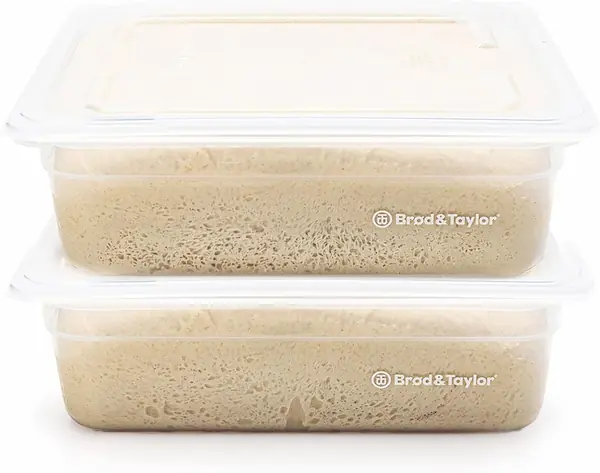
Brod & Taylor beige proofing containers with snap lids and volume markings

Bulk fermentation

Bake Score 94/100
Dimensions
12.8 x 10.5 x 4 inches
Capacity
6 liters each
Lid
Airtight snap lid
Cleaning
Dishwasher safe
View on Amazon

The volume markings are the first thing you notice on the Brod & Taylor containers. Instead of lifting the lid to check a bulk ferment, you can watch the dough climb the side and leave the warmth where it belongs. That is a small convenience with a real effect on timing.

Each container holds 6 liters, enough for two or three standard loaves, and the 12.8 by 10.5 by 4-inch footprint slides onto a fridge shelf or into a Brod & Taylor folding proofer. The lid snaps down with a firm seal, and the containers stack with or without their lids. We recommend this pair for bulk fermentation and cold retards; it is not the tray we choose for six portioned pizza balls.

The low walls are the compromise. At 4 inches tall, the container is easy to slide under a shelf, but a very active dough can climb toward the lid, so leave headroom. The payoff is cleanup: both the container and lid are dishwasher safe. The two-pack also lets us keep one batch fermenting while the other is clean and ready.

Worth Noting

  • Not shaped for portioned pizza dough balls
Our Verdict

We make the Brod & Taylor pair our default for most home bakers: two 6-liter boxes with tight lids, clear markings, and dishwasher-safe cleanup.

Check Latest Price
2

GSM Pizza Dough Proofing Box Best for Pizza Dough

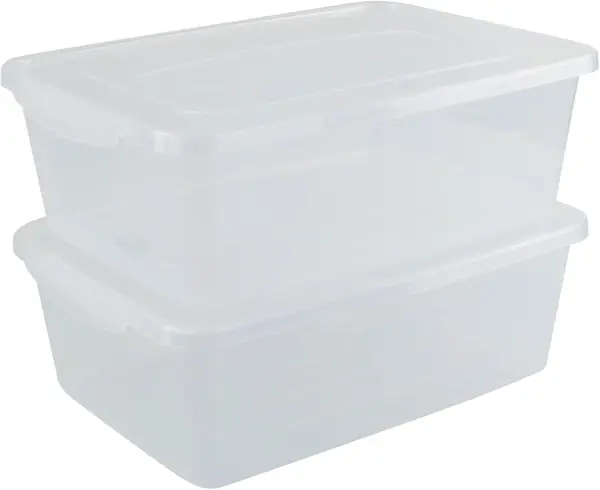
GSM white stackable dough proofing trays with fitted covers

Pizza dough balls

Bake Score 93/100
Dimensions
17.25 x 13 x 3.54 inches
Material
BPA-free plastic
Trays
2 with covers
Stackable
Yes
View on Amazon

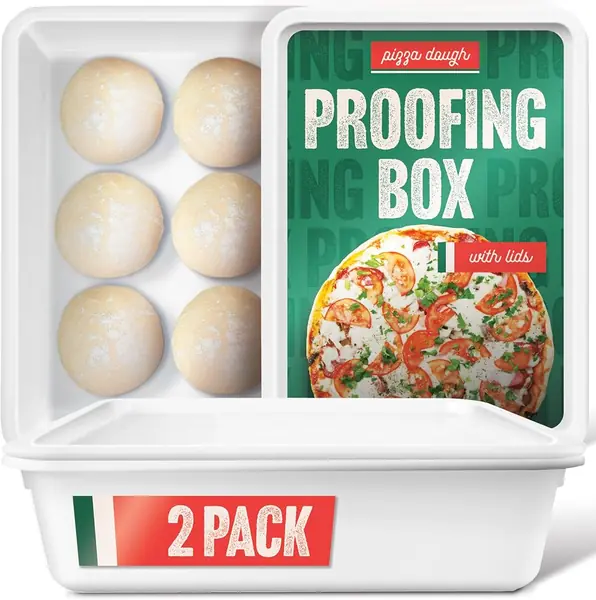
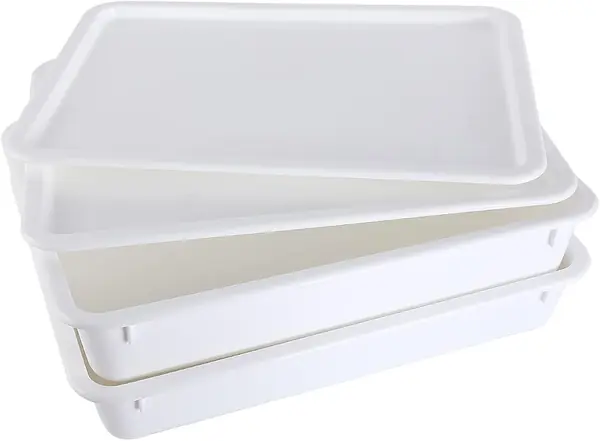
Where the Brod & Taylor containers are built for bulk, the GSM trays are built for pizza night. We prefer this pair when the dough is already portioned: each 17.25 by 13 by 3.54-inch tray holds six 275-gram balls with enough space between them, and the low sides make it easy to reach in with a bench scraper. The two trays stack in the fridge, which is the whole game when you are cold-fermenting.

The plastic is rigid enough that the covers sit flat and a second tray can ride on top. When the covers are off, the basins nest, so storage is less awkward than it looks for a 17-inch box. The trays also have enough structure that a loaded stack does not bow in the fridge.

None of that changes what the trays are good at. They are sturdy, they release dough cleanly, and they turn a messy counter of oiled balls into two neat stacks. If you make six pizzas at a time, this is the pair we hand you.

Worth Noting

  • Lids are snug, not airtight
  • Hand wash only
Our Verdict

We keep the GSM trays for portioned dough: two sturdy 17-inch boxes that hold six 275-gram balls each and stack in the fridge.

Check Latest Price
3

GIYUDOT Folding Bread Proofing Box Best Temperature-Controlled

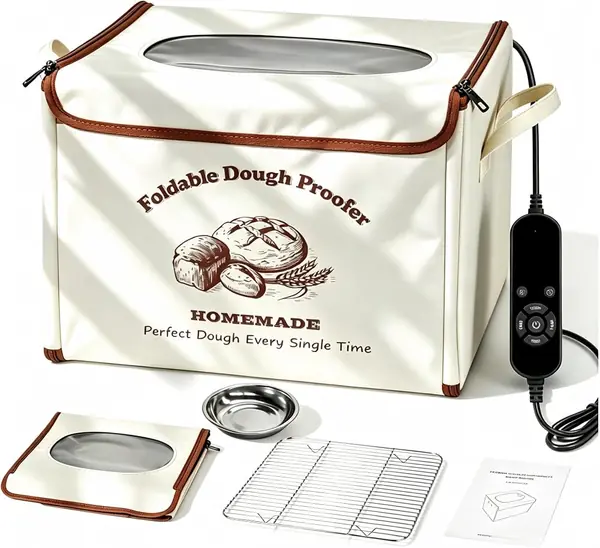
GIYUDOT beige folding bread proofing box with controller and metal rack

Cold kitchens

Bake Score 92/100
Capacity
22 liters
Timer
48 hours
Foldable
Yes
Temperature Range
50-113 °F
View on Amazon

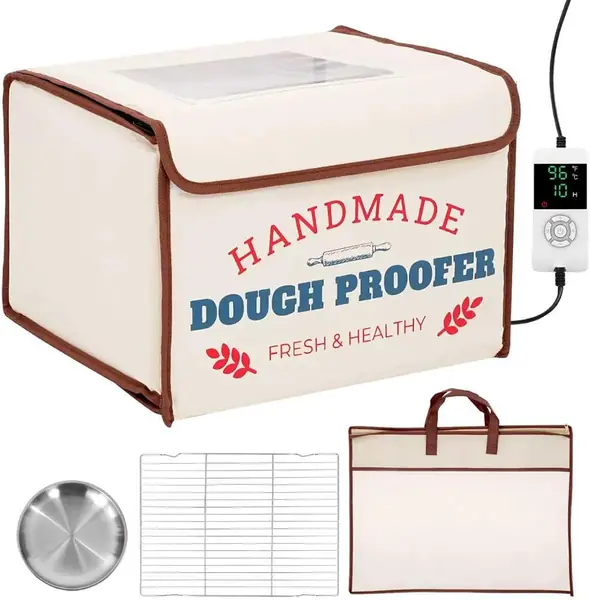
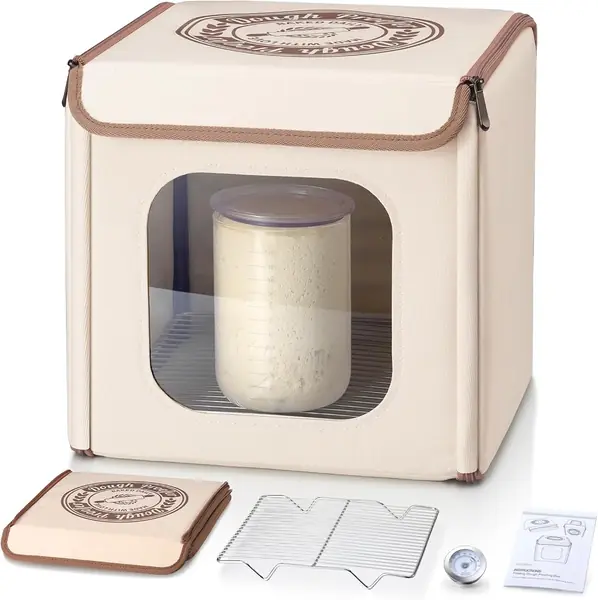
A cold kitchen is the reason to look at a heated box. In winter, a bowl of sourdough can sit for hours without showing much movement, and no amount of wrapping solves that reliably. The GIYUDOT is a fabric cabinet with a controller, a metal rack, and enough insulation to hold a set temperature while a batch takes its time.

We recommend it first for that job because the range runs from 50 to 113°F and the timer goes out to 48 hours, so you can set a bulk ferment overnight and not think about it. The 22-liter interior fits two 4-quart containers or a couple of bread pans, and the rack keeps the dough off the heated base. We like the controller's simple buttons; there is no app to fight when your hands are covered in flour.

The trade-off is the fabric body. It folds flat, and the cord detaches, which makes it easy to put away in a small kitchen. It also takes up a roughly 12-inch square of counter while it is working. For a cold house and a regular sourdough habit, that size is fair.

Worth Noting

  • Fabric body cannot be stacked
Our Verdict

For a cold kitchen, we reach for the GIYUDOT: 50 to 113°F, a 48-hour timer, and a fold-flat body.

Check Latest Price
4

Hans Grill Pizza Dough Proofing Box Best Dishwasher-Safe

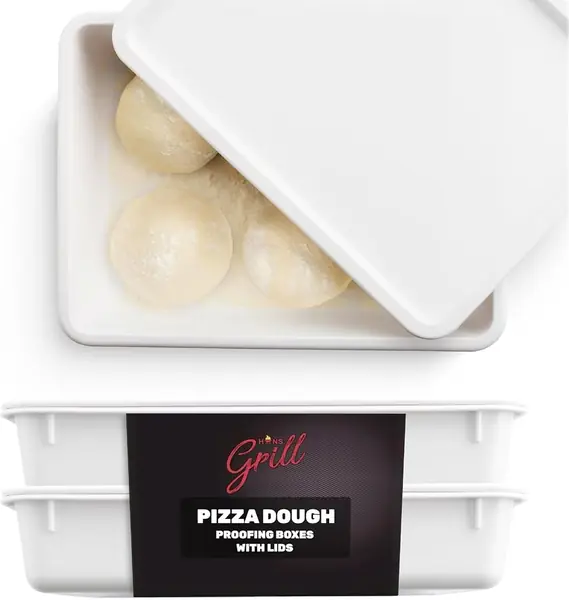
Hans Grill white stackable dough proofing trays with clear lids

Easy cleanup

Bake Score 91/100
Dimensions
17.32 x 12.99 x 3.54 inches
Material
BPA-free plastic
Trays
2 with lids
Cleaning
Dishwasher safe
View on Amazon

The dishwasher-safe label is what moved the Hans Grill trays up our list. Most flat proofing boxes here are hand wash only, and that matters when you are oiling dough balls every week. These two 17.32 by 12.99 by 3.54-inch trays go straight into the dishwasher, lids and all, and they still feel rigid enough to stack.

Each tray holds six dough balls, and the plastic has a dense, heavy-duty feel that resists bowing when the top tray is loaded. The surface releases dough cleanly; we noticed less sticking than with thinner trays, even when the balls were only lightly oiled. The 17-inch footprint is close to a half-sheet pan, so it slides onto a fridge shelf without a game of Tetris.

The weight is the trade. At 2.18 kilograms for the pair, these are not the trays you toss into a tote for a friend's house, but they are the ones that feel like they will outlast the novelty of pizza night. We reach for them when cleanup and stiffness matter more than shaving ounces.

Worth Noting

  • Lids rest loosely, not airtight
Our Verdict

Cleanup is why we keep the Hans Grill pair close: two dishwasher-safe 17-inch trays that hold six dough balls each and stack without fuss.

Check Latest Price
5

Stock Your Home Dough Proofing Container Best Vented Lid

Stock Your Home white dough proofing containers with vented lids

Moisture control

Bake Score 90/100
Dimensions
17 x 13 x 3.25 inches
Material
BPA-free plastic
Lid
Vented
Boxes
2 with lids
View on Amazon

A vented lid sounds like a small detail until you have pulled a tray of dough balls out of the fridge and found a dry skin on top. The Stock Your Home boxes have a lid that retains moisture while letting excess gas escape gradually, which is the balance you want for a few hours or a day of proofing.

The pair measures 17 by 13 by 3.25 inches, and each box fits six dough balls without crowding. The lid is a gravity seal rather than a snap lock, so you set it on and stack the next box; the weight of the stack keeps it in place. We like that the lower height leaves room for a second box on a fridge shelf, and the smooth interior wipes clean without corners to dig into.

This is not the box for a two-day cold retard with no cover, because the vent is doing its job. It is the one we reach for when we want a crack-free surface and a little airflow. The lids are also easy to line up, which sounds trivial until you are stacking two loaded boxes in a hurry.

Worth Noting

  • Hand wash only
Our Verdict

We choose the Stock Your Home boxes when dough needs a little air: two 17-inch boxes with vented lids that hold moisture in and let gas out.

Check Latest Price
6

InnovifyHub Bread Proofing Box with Heater Best Wide Temperature Range

InnovifyHub off-white folding heated bread proofing box with controller

Bread and ferments

Bake Score 89/100
Timer
24 hours
Foldable
Yes
Temperature Range
50-130 °F
Wattage
100 watts
View on Amazon

The 50 to 130°F range is the reason to look at the InnovifyHub instead of a dough-only box. It covers the usual proofing temperatures and goes high enough for yogurt, kombucha, or softening butter, so it can earn counter space outside pizza night. We like a single-purpose appliance as much as anyone, but a box that does more is easier to justify.

The 24-hour timer and 100-watt, three-sided heat are aimed at even warming, and the 22-liter interior fits one large 5-liter bowl, a banneton, or several mason jars. It folds down and comes with a carry bag, which is the detail that makes it practical in a small kitchen. The controller is digital and the temperature setting is straightforward.

The fabric shell is the limit. It is not a rigid box, and the 22-liter capacity is smaller than it sounds once you add a big bowl. For a cold kitchen and a baker who also ferments yogurt, though, the trade is easy to live with.

Worth Noting

  • Fabric shell cannot be stacked
Our Verdict

For bread plus yogurt or kombucha, we point to the InnovifyHub: 50 to 130°F, a 24-hour timer, and a body that folds flat.

Check Latest Price
7

Cozy Bread Proofing Mat & Insulation Box Best for Small Kitchens

Cozy Bread proofing mat and white insulated box kit

Small kitchens

Bake Score 88/100
Foldable
Yes
Control
Adjustable thermostat
Includes
Heating mat and insulation box
Mat Size
10 x 21 inches
View on Amazon

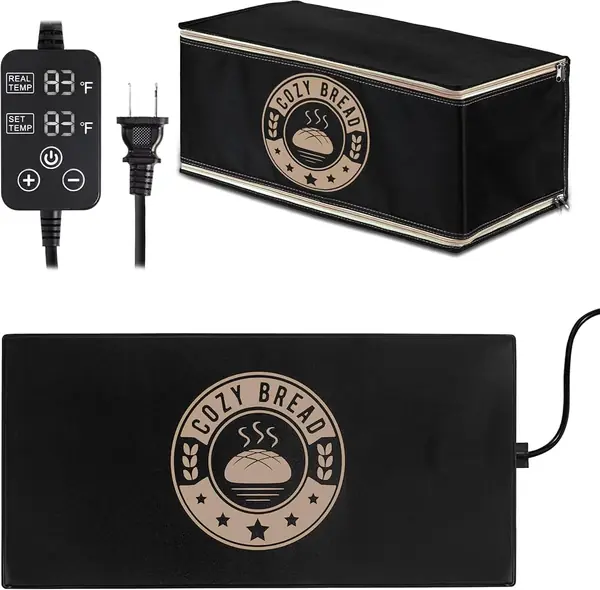
The Cozy Bread kit takes a different approach: a 10 by 21-inch heating mat and a soft-sided insulation box instead of a rigid cabinet. The box folds or rolls down when you are done, and the mat can be used under a bowl, a jar, or a container you already own.

We like it for a small counter because it does not commit you to one container, and it can hold two bowls or several containers at once. The thermostat lets you dial in warmth, and the mat warms in about a minute or two. The heat can run uneven across the mat, so keep a thermometer in the box until you know your spot and give the dough some clearance from the edges.

It costs more than the compact heated boxes here, so buy it for the fold-flat footprint and the flexibility, not for savings. The mat needs a flat surface. For a small kitchen with more than one ferment going, that is still a useful trade.

Worth Noting

  • Soft-sided box cannot be stacked
Our Verdict

The Cozy Bread kit is our pick for a warming setup that folds flat, as long as you keep a thermometer handy and do not need rigid stacking.

Check Latest Price
8

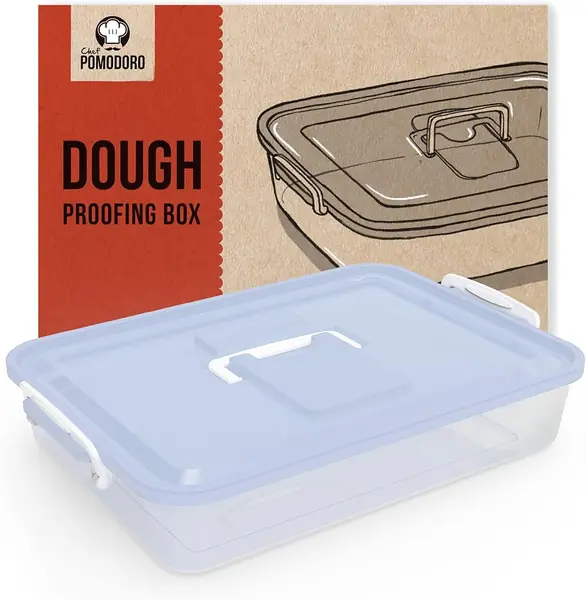
Chef Pomodoro Pizza Dough Proofing Box

Chef Pomodoro blue rectangular dough proofing box with clear lid

Occasional pizza

Bake Score 87/100
Dimensions
14 x 11 x 3 inches
Capacity
4-6 dough balls
Material
BPA-free ABS plastic
Lid
Snap-on clear lid
View on Amazon

The Chef Pomodoro is the budget entry, a box for someone who wants to try a dedicated proofing setup without committing to a heated cabinet. It measures 14 by 11 by 3 inches, holds four to six dough balls, and has a clear lid and a carry handle. The handle is the practical detail: you can move a loaded box from counter to fridge without balancing it on your forearms.

The lid snaps into place, and the transparent top lets you check the rise without opening the box. The tray is stackable, and the recessed handle doubles as a stacking point when the box is empty. The plastic is stiff enough for a home batch of pizza dough.

For a same-day dough or a short fridge rest, it does the job at the lowest price here. We hand it to casual pizza makers first, and we keep it for backup batches. It is the box we lend to a friend who wants to try pizza night.

Worth Noting

  • Lid is not reliably airtight
Our Verdict

For occasional pizza, the Chef Pomodoro is the budget box we hand out: it holds four to six balls, has a carry handle, and stacks in the fridge.

Check Latest Price
9

Vababa 2-Pack Pizza Dough Proofing Box Best for Large Batches

Vababa clear rectangular dough proofing containers with locking lids

Large batches

Bake Score 86/100
Dimensions
16.45 x 11.65 x 5.7 inches
Capacity
16 liters each
Boxes
2 with lids
Closure
Locking latches
View on Amazon

The Vababa pair is the oversized option in this group. Each container is 16 liters, 16.45 by 11.65 by 5.7 inches, and clear enough to see a dough ball from the side. If you make multiple loaves at once, capacity is the point: one container can hold seven plain loaves or six inclusion loaves.

We like the capacity for bulk sourdough and big pizza runs, and the rectangular shape stacks without wasting fridge width. The lids latch down with clips, and the clear walls make it easy to check progress without opening the box. The footprint is close to a 17-inch tray, but the 5.7-inch height needs a shelf with more clearance.

The 5.7-inch height is the one measurement to check before ordering; it needs more shelf clearance than the 3-inch trays here. For a big batch that stays on one shelf, the capacity is worth it. It also doubles as a brining or produce bin when you are not proofing, which is more than we can say for the dedicated trays.

Worth Noting

  • Lid and latch feel less durable
Our Verdict

When one batch turns into seven loaves, we reach for the Vababa pair: two clear 16-liter boxes that hold a big run of dough.

Check Latest Price
10

Yacumx Foldable Bread Proofing Box Best for Precision Proofing

Yacumx off-white foldable bread proofing box with control panel

Precision proofing

Bake Score 84/100
Capacity
28 liters
Timer
1-24 hours
Temperature Range
70-122 °F
Accuracy
±1 °F PID
View on Amazon

The PID controller is the center of the Yacumx design. It advertises a 70 to 122°F range with ±1°F precision and a 1- to 24-hour timer, which is the kind of control you want for a long, slow ferment or a starter that needs a steady warm spot. The 28-liter chamber is the largest heated interior here.

We like the separate control panel and the included hygrometer; the setup feels more like a small appliance than a fabric bag. The package includes a stainless steel bowl and an iron stand, and the body folds to 45mm for storage. The 28-liter chamber leaves room for a bowl plus a jar, which is more than the compact boxes manage.

The ±1°F figure is a manufacturer claim, so put a thermometer in the box for the first few bakes. The 28-liter chamber is generous, and the stainless bowl and hygrometer are useful extras. If precise control is what you need, it is worth a look; the simpler heated boxes are easier to live with if you want set-and-forget.

Worth Noting

  • Wipe-clean interior only
  • Foldable body is not built for stacking
Our Verdict

We point to the Yacumx when precise, set-and-forget temperature control matters: a 28-liter chamber, PID control, and a 45mm fold.

Check Latest Price

How We Tested the Best Bread Proofing Boxes

We started with everything sold for proofing in the U.S. and cut the list down to 12 units that covered the real spread of the category: plain stackable tubs with lids, collapsible boxes, and heated models with digital thermostats and timers. Listings with vague capacity claims and no lid spec didn't make it.

Each box spent eight months in a home kitchen — on the counter near a drafty window, inside a cold oven, and on the fridge shelf for overnight retards. I mixed one 70 percent hydration dough and divided it into every container, then checked the dough with an instant-read thermometer at the start and again at one, two, and four hours.

Temperature control got a separate run on the heated models: we set each to 75°F, then to its top setting, and watched how far the box air drifted from the target over four hours and whether one side ran warmer than the other. For lid functionality and airtightness, I dusted each rim with flour, sealed the lid, and left it 24 hours to see where air moved, then filled the box with water and tipped it to check for leaks at the seams.

We loaded two full boxes and stacked them, noting bowed lids and whether dough touched the top. Size went against a standard fridge shelf and a half-sheet pan. Rise was measured by taping a mark at the starting height and comparing at the end, and every container went through the dishwasher several times to see if seams clouded or lids warped. Then we weighed cost against usable dough capacity.

How to Choose a Bread Proofing Box

Start with the shape of your bake

A flat 17-by-13-inch dough proofing box is for portioned dough balls: it lets you space six 275-gram balls without crowding, and the low sides make them easy to reach. A taller 6-liter container is for bulk fermentation, where you need depth for folds and room for the dough to climb. We keep both kinds on hand because they solve different problems. If you bake mostly boules, start with the bulk container; if pizza night is the routine, start with the trays.

Measure the fridge shelf, not just the counter

Footprint matters, but height is the spec that gets missed. A 3.25- to 3.54-inch tray slides under a shelf; a 5.7-inch container may need the shelf above it moved. Measure the shelf depth and the clearance above it, then add an inch for a lid and a little room for dough. Stackability helps, but only if the boxes are rigid enough to carry the load. A 17-inch tray is close to a half-sheet pan, so use one as a template.

Decide how sealed you want the lid

A tight lid keeps moisture in and is the right choice for a bulk ferment or a cold retard where a dry skin can ruin the surface. A vented lid lets excess gas escape gradually, which can be useful for portioned dough balls. Neither is automatically better. If the lid is snug rather than airtight, a layer of plastic wrap is cheap insurance for a long ferment. Check whether the lid snaps, latches, or simply rests on the box, because that changes how you carry it.

Heat is for cold kitchens, not every kitchen

A heated box is worth it when your kitchen sits below the low 70s for much of the year, or when you want a starter or dough to move on a schedule. Look for a range that covers 70 to 80°F for dough, a timer long enough for an overnight ferment, and a thermostat you can set by degrees. A mat-and-box kit folds flat and works with containers you own, but the heat can be uneven; keep a thermometer in the box. If your kitchen is already warm, a lidded container is simpler and easier to store.

Plan for cleanup and storage

Dough boxes get oily, so cleaning is not a minor detail. Dishwasher-safe trays are the easiest to live with if you make pizza weekly; hand-wash-only boxes are fine but need a sink that fits a 17-inch tray. Folding heated boxes earn their space back when the bake is done, while rigid boxes stack and nest. Before you buy, decide where the box will live when it is empty, not just where it will sit while the dough rises.

Frequently Asked Questions

Final Verdict

Most bakers should start with the Brod & Taylor Proofing Container set. The two 6-liter boxes have the tight lid, clear markings, and dishwasher-safe cleanup that make a bulk ferment easier to judge and easier to finish. If you portion dough into balls, the GSM trays are the better shape; if your kitchen is cold, the GIYUDOT gives you heat and a timer without a permanent appliance. Buy for the dough you actually make, not the one you plan to make someday.