The 8 Best Aebleskiver Pans of 2026

There's a moment about a minute into cooking aebleskiver when you have to commit. The batter has set at the edges, you slide a skewer under one half-sphere, and you find out whether the pan will release it cleanly or tear it open. Thin pans fail right there — they heat in a ring, the coating grabs, and the wells are too shallow to hold a full turn.

A pan that passes that test earns its cabinet space all year, because the same wells turn out takoyaki, appam, and poffertjes. Working through 12 of them — cast iron and nonstick, from seven wells to nineteen — taught us that well depth and even heat matter more than the material debate. Nonstick washes up in a minute but the coating sets the pan's lifespan; cast iron lasts decades but wants seasoning and a longer preheat. Every pan we recommend flipped cleanly, batch after batch.

Our Top Picks

The Best Aebleskiver Pans

1

Norpro Nonstick Stuffed Pancake Pan Best Overall
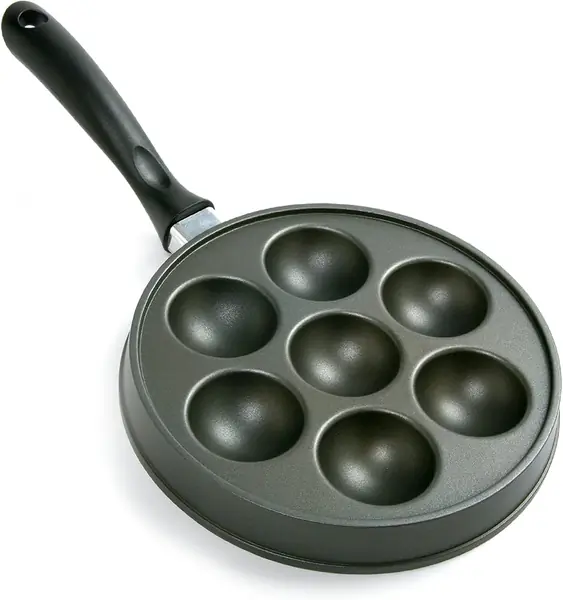
Norpro nonstick stuffed pancake pan with seven round wells and a long black handle

First-time aebleskiver cooks

Bake Score 92/100
Material
Cast aluminum with nonstick
Handle
7.5-inch stay-cool
Weight
1.7 lb
Dimensions
16.5 x 9 x 1.25 in
View on Amazon

The Norpro is the pan we kept coming back to because it removes the two annoyances that make aebleskiver feel fussy: a heavy pan that fights you and a surface that grips the batter. Cast aluminum keeps it to 1.7 pounds, and the 7.5-inch handle stays comfortable while you turn batch after batch. It sat flat on both a glass-top electric range and a gas burner in our testing, which is more flexibility than several of the cast-iron pans here offer.

The nonstick coating is the practical star. The first batch released without the torn edges that make aebleskiver look like failed golf balls, and cleanup was a quick hand wash rather than a soak. The pan is dishwasher-safe on paper, but we hand-wash any nonstick pan to protect the coating; that habit matters more here because the wells are where a scratch would show up first.

The wells are not as wide as Nordic Ware's 2.3-inch cups, and there is no turning tool in the box, so plan on chopsticks or a small skewer. That makes the Norpro better for a manageable first pan than for the biggest puffs. The recipes are a help for fillings. For most people, that trade is easy: the Norpro is the most forgiving route to a plate of aebleskiver, and it costs about the same as the traditional pan.

Worth Noting

  • Long 16.5-inch body crowds small stovetops
Our Verdict

The Norpro is the pan we recommend first: light enough to handle, broad enough for gas or electric, and forgiving enough for a first batch.

Check Latest Price
2

Nordic Ware Danish Ebelskiver Pan Best Traditional Seven-Well Pan

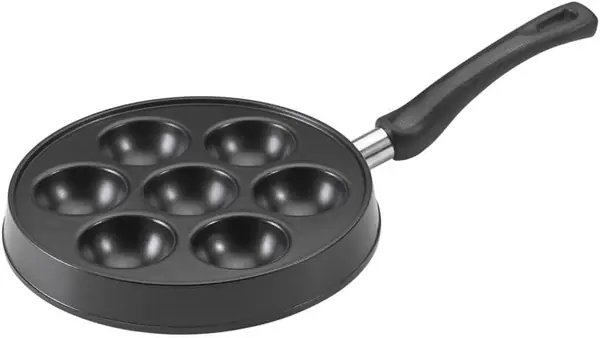
Nordic Ware black cast-aluminum ebelskiver pan with seven round wells and a black handle

Traditional seven-well batches

Bake Score 91/100
Material
Cast aluminum, nonstick
Cavities
Seven, 2.3 inches
Warranty
10 years
Pan Diameter
9.5 inches
View on Amazon

Seven wells sounds modest next to the Hawkins's 12 cups, but Nordic Ware makes each one 2.3 inches across, wide enough for a proper round puff rather than a bite-size sphere. The cast-aluminum body heats quickly, and the nonstick surface lets the batter release with a light nudge. The phenolic handle stayed cool on a gas range in our testing, and the pan's 9.5-inch diameter sits neatly on a normal burner.

The trade-off is coating care. The nonstick is the part to protect, and the durability picture is mixed: some pans stand up for years, while others show scratches or peeling after a short run. We use wooden or silicone turning tools here and avoid stacking anything on the cooking surface. The 10-year warranty is meaningful backup, but it does not make a scratched well forget what happened.

Where the Nordic Ware earns its place is the shape of the puff. The wide, rounded wells give you the classic ebelskiver profile, and the pan is light enough to lift with one hand when you need to move it off the heat. It costs more than the Norpro and asks for more careful cleaning, so we see it as the pick for someone who wants the traditional seven-well experience and will treat the coating kindly. If you need more capacity or a lid, the Hawkins is the better fit.

Worth Noting

  • Hand-wash only
Our Verdict

The Nordic Ware is the traditionalist's pick: seven wide wells turn out classic round puffs, provided you hand-wash and baby the nonstick.

Check Latest Price
3

Iwatani Takoyaki Grill Pan Best Lightweight Pan for Gas Stoves

Iwatani black nonstick takoyaki grill pan with round molds and a compact rectangular body

Gas-stove takoyaki

Bake Score 90/100
Material
Nonstick aluminum
Weight
1.6 lb
Dimensions
10.2 x 8.3 x 1.6 in
Cleanup
Dishwasher safe
View on Amazon

The Iwatani is a takoyaki pan first: 10.2 by 8.3 inches, 1.6 pounds, and a nonstick aluminum body that heats fast. Its low sides and small wells are made for turning octopus balls with a skewer, and the pan stores in a cabinet without ceremony. The nonstick coating is a real help when the batter is loose and the wells are crowded.

We liked it most for a quick takoyaki night, not for a big aebleskiver project. The shallow wells mean small, crisp pancake balls rather than tall puffs, and the batter sets fast enough that you need to work quickly with a skewer. The pan wipes clean, but it is thin enough that high heat is counterproductive. It is a one-job pan that does that job well.

The Iwatani makes sense if you want a dedicated takoyaki pan that doubles for small pancake balls. It is light, stores easily, and costs less than the cast-iron pans here. For traditional aebleskiver with deep wells and a stay-cool handle, the Norpro is more forgiving.

Worth Noting

  • Gas-burner design limits cooktop choice
Our Verdict

The Iwatani is a light, gas-friendly takoyaki pan that turns out small pancake balls; choose it for quick savory batches, not deep traditional aebleskiver.

Check Latest Price
4

Hawkins Nonstick Appe Pan Best for Appe and Paniyaram

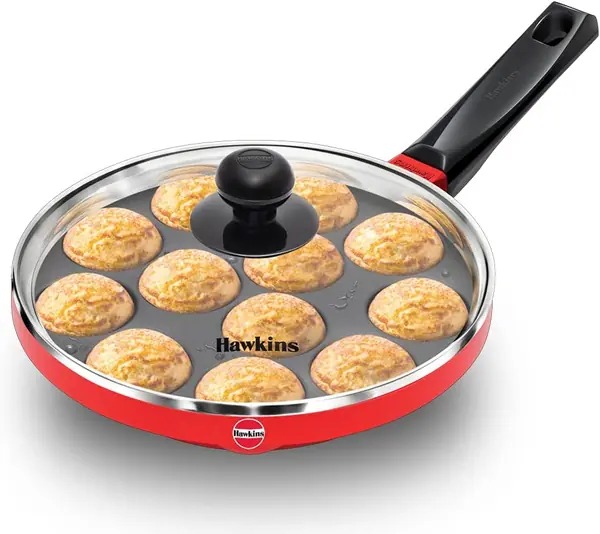
Hawkins black nonstick appe pan with twelve small cups, red exterior, and glass lid

Appe and paniyaram

Bake Score 89/100
Material
Die-cast aluminum, nonstick
Compatibility
Gas stovetop
Cups
12, 25 ml each
Diameter
20 cm
View on Amazon

If your aebleskiver ambitions lean toward appe, paniyaram, or banh khot, the Hawkins is the pan we recommend first. Twelve cups give you a lot of small, round bites at once, and the die-cast aluminum body is light enough to lift and rotate without wrestling. The PFOA-free nonstick surface released the batters we tried without a hard scrub, and the glass lid is a real convenience for steaming or keeping a finished batch warm.

The cups are the catch: 25 ml each is small, so these are bite-size puffs rather than the deep, generous spheres you get from a 2.3-inch aebleskiver well. That makes the Hawkins better for appe and paniyaram than for a traditional Danish breakfast. It also has 12 cups packed into a 20 cm pan, so the wells are close together; a slim skewer or the included wooden remover is easier than a wide spatula.

We like the lid more than we expected. It turns the pan into a steamer for appam and keeps splatter contained when the batter hits a hot well. The integrated flame guard is a sensible detail on a gas stove, and the pan's 2.7 pounds feels sturdy without being tiring. For someone who wants a single pan for South Indian breakfasts and small stuffed pancakes, the Hawkins is a strong value. For classic aebleskiver, the Norpro's larger wells are the better match.

Worth Noting

  • Gas stovetop only
Our Verdict

The Hawkins is our pick for appe and paniyaram: 12 small nonstick cups and a glass lid make batch cooking easy, though the puffs are bite-size.

Check Latest Price
5

KUHA Cast Iron Aebleskiver Pan Best Cast Iron with Tools

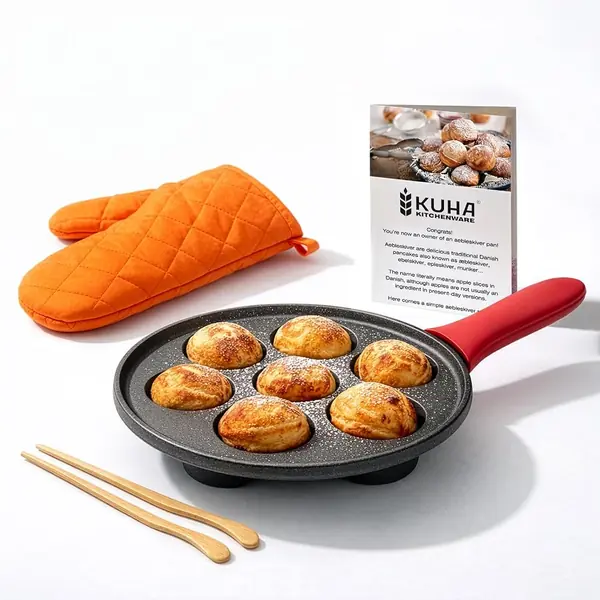
KUHA black pre-seasoned cast iron aebleskiver pan with seven wells and removable silicone handle

Crisp cast-iron puffs

Bake Score 88/100
Material
Pre-seasoned cast iron
Oven Safe
500 °F
Pan Width
7.9 inches
Well Diameter
2 inches
View on Amazon

The KUHA arrives pre-seasoned, but cast iron still asks for a different rhythm: slow preheat, low to medium heat, and more oil in the first few batches than a nonstick pan needs. The 7.9-inch pan has 2-inch wells, so the puffs are a good size for a small household, and the cast iron gives them crisp edges and a tender center when the heat is right.

The accessories are the reason to look closely. You get bamboo skewers, a removable silicone handle, a cotton oven mitt, and a recipe and care leaflet. The skewers are the right tool for the quarter-turn, and the removable handle makes the pan easier to store. We paid close attention to the handle because cast iron gets hot: the silicone sleeve helps, but the pan still stays hot enough to need the mitt.

The nonstick performance is the split. Some batches release cleanly; others stick, especially if the pan is not hot enough or the wells are not oiled generously. We found the pan rewarded patience more than nonstick pans do. The surface is also rougher than a machined cast-iron pan, which is normal for this price but worth knowing if you expect a glass-smooth finish.

Where the KUHA makes sense is for a cook who wants cast-iron crispness and a pan that can go into a 500 °F oven. It is not the easiest first aebleskiver pan, and the pan is sized for a small household rather than a crowd. But the included tools and the sturdy feel make it a satisfying step up for someone ready to season and preheat properly.

Worth Noting

  • Small 7.9-inch cooking surface
Our Verdict

The KUHA is a sturdy cast-iron pan with the tools to get started; it rewards slow preheating and generous oil, but it is not the plug-and-play choice.

Check Latest Price
6

COOKKING Takoyaki Nonstick Grill Pan Best Compact Pan

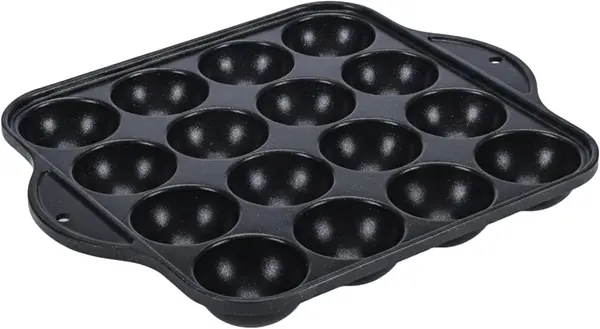
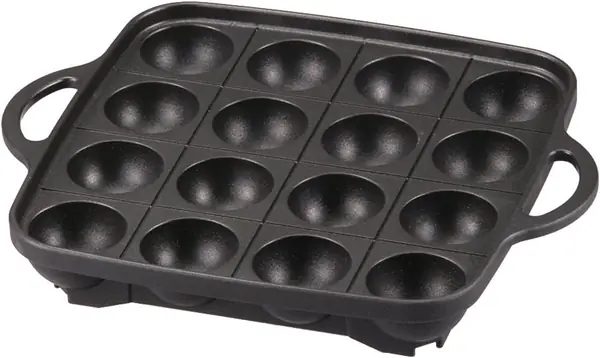
COOKKING black square nonstick takoyaki pan with sixteen small round molds

Small kitchens

Bake Score 87/100
Material
Nonstick aluminum
Dimensions
7.8 x 7.8 in
Compatibility
Gas
Molds
16, 1.7 inches
View on Amazon

At 7.8 inches square, the Cookking is the pan that disappears into a cabinet and still turns out 16 small, round takoyaki or pancake balls. The nonstick aluminum body is light, the molds are 1.7 inches across, and the square shape makes it easy to fit on a small burner. It is a compact pan, not a family-sized one: 16 molds sounds like a lot until you see how small each one is.

We liked it for weeknight takoyaki and bite-size aebleskiver, where the small wells cook fast and the nonstick surface lets you turn the balls with a skewer without tearing them. The pan heats quickly, so keep the flame moderate; the coating and the thin aluminum do not need a blast of heat. It is a dedicated small-batch pan, and that is the point.

Cleanup is a quick wash, and the pan's size makes it easy to store. The trade-off is capacity and browning: small wells mean more batches and less of the deep, custardy center you get from a wider aebleskiver pan. For a small household or someone who wants a dedicated takoyaki pan without spending much, the Cookking is an easy yes. If you want classic aebleskiver for a crowd, go bigger.

Worth Noting

  • Gas-compatible only
  • No turning tool included
Our Verdict

The Cookking is a compact, budget-friendly pan for small takoyaki and pancake balls; it heats fast and stores easily, but the 16 molds are bite-size.

Check Latest Price
7

Upstreet Cast Iron Aebleskiver Pan Best for High-Volume Poffertjes

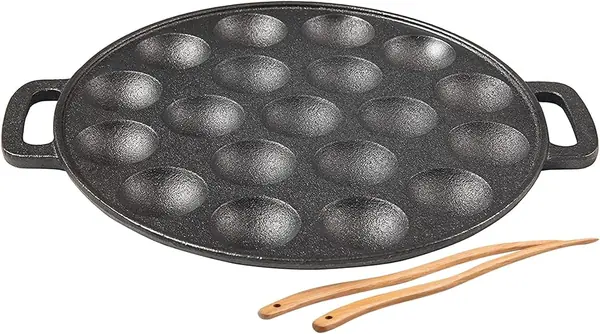
Upstreet black cast iron aebleskiver pan with nineteen small wells and a silicone handle

High-volume poffertjes

Bake Score 84/100
Material
Cast iron
Handle
Silicone
Weight
4 lb
Wells
19
View on Amazon

Nineteen wells is the first thing you notice about the Upstreet, and it changes the math of aebleskiver: this is a pan for poffertjes, takoyaki, and feeding a table rather than making a neat batch of seven. The cast-iron body is sturdy, with a silicone handle and a flat base that the maker says works on electric coil. The wells are small, so the puffs are poffertjes-size rather than full Danish aebleskiver.

Cast iron brings crisp edges, but it also brings a seasoning learning curve. The pan arrives with a nonstick coating description, yet release is mixed: some batches come out clean, others stick even after seasoning. We treat the first few uses as practice and oil the wells more than we think we need. Heat distribution is the other variable; the pan can run hot in the center on a coil burner, so rotate it and keep the heat moderate.

The Upstreet earns its place if you want a large batch of small, crisp puffs and do not mind tending a heavy pan. It is not the easiest introduction to aebleskiver, and the 375 °F maximum temperature means you should not treat it like a searing skillet. For a family brunch or a poffertjes night, the 19 wells are genuinely useful. For a first pan and classic round puffs, the Norpro is simpler.

Worth Noting

  • Heavy 4-pound body
Our Verdict

The Upstreet is a high-volume cast-iron pan for poffertjes and small takoyaki; 19 wells are fun for a crowd, but the pan is heavy and needs seasoning patience.

Check Latest Price
8

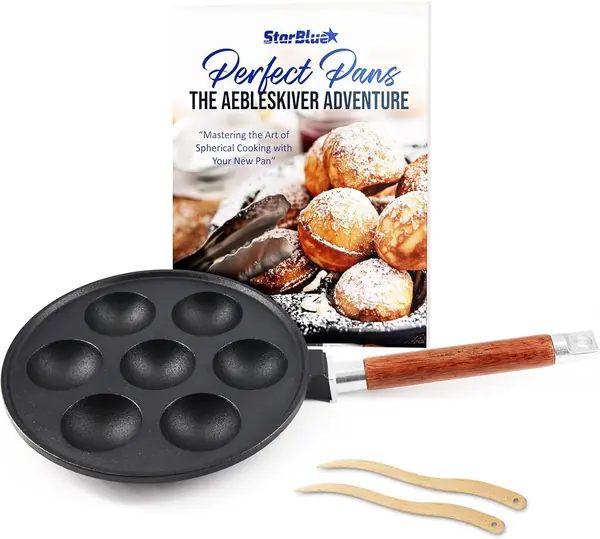
StarBlue 7-Hole Cast Iron Aebleskiver Pan Best for Tight Storage

StarBlue black cast iron aebleskiver pan with seven wells and a removable wooden handle

Tight storage

Bake Score 83/100
Material
Pre-seasoned cast iron
Handle
Removable wood
Wells
7
Included
Sticks and recipe book
View on Amazon

The StarBlue's removable wooden handle is the detail that sold us on it for a small kitchen: the pan stores in less space than a fixed-handle cast-iron pan, and the handle screws on solidly when it is time to cook. Seven wells give you a standard batch, and the pre-seasoned cast iron is ready to use after a wash and a light oiling. The pan is hefty, so the handle is doing real work when you lift a full pan.

The cooking surface is where the pan asks for patience. Cast iron needs a slow preheat, and release is mixed: some batches come out cleanly, while others stick if the wells are not oiled well. We keep a small dish of oil nearby and brush each well before adding batter. The pan also arrives with a pair of turning sticks and a recipe book, which is a nicer start than most pans offer.

On gas or a coil burner, the pan does what a cast-iron aebleskiver pan should: it holds heat and gives the puffs a crisp shell. The surface is rougher than a machined pan, and the first few batches need more oil than you expect. The included sticks are the right length for turning, and the recipe book is a useful starting point rather than a decoration.

The StarBlue makes the most sense for someone who wants cast-iron results, a removable handle, and a starter kit without paying premium prices. It is not the most refined cast iron here, but for a small kitchen and a weekend batch, the storage advantage is easy to appreciate.

Worth Noting

  • Induction performance is unreliable
  • Heavy 4.4-pound body
Our Verdict

The StarBlue is a practical cast-iron pick for tight storage, with a removable handle and turning sticks; just do not count on the induction claim.

Check Latest Price

How We Chose and Tested Aebleskiver Pans

We started by gathering every aebleskiver pan we could reasonably buy — cast iron, nonstick aluminum, seven wells up to nineteen — and set aside anything with wells shallower than about an inch, handles that couldn't survive a hot oven, or coatings that reviewers repeatedly described as chipping. That left 12 pans, which we cooked with for eight months.

Testing happened where these pans actually live: Saturday mornings with a bowl of batter and two impatient kids, takoyaki nights with friends, and appam for dinner. Each pan got the same medium preheat and the same batter, and we watched where the first sphere browned — center of the pan versus the outer ring — to judge how evenly the heat spread. We measured well diameter and depth with a ruler and noted how much batter each well actually held, since a shallow well gives you a smaller sphere that's harder to turn.

We turned every sphere by hand with a skewer and chopsticks, counting the torn ones and noting whether each release was clean or the crust stuck and needed coaxing. Handles got grabbed bare-handed and with a mitt, and lids were fitted and checked for wobble. Cleanup was timed too: a soak, a hand wash, and a pass with a nonstick-safe sponge, with beaten egg left to sit in one well on purpose to see how much effort it took to lift.

Across repeated batches we tracked how each pan aged — cast iron darkening and holding its seasoning, nonstick surfaces picking up scratches from skewers, handles working loose. We also compared cost per cooking well, because a nineteen-hole pan and a seven-hole pan aren't doing the same job for the same money.

How to Choose an Aebleskiver Pan

Start With Well Shape and Depth

A true aebleskiver pan has deep, rounded wells, not shallow dimples. Depth is what lets you fill the well, add a little batter on top, and turn the puff without the whole thing collapsing. For classic Danish aebleskiver, look for wells around 2 inches across; the Nordic Ware's 2.3-inch wells and the KUHA's 2-inch wells are in that range. Takoyaki pans often have smaller, shallower wells, which is fine for bite-size balls but not for tall puffs.

A flat mini cake pan is not a substitute. Its impressions are for baking, not for the quarter-turn that gives aebleskiver their spherical shape. If the wells are much smaller than 2 inches, expect poffertjes or bite-size puffs rather than the traditional size.

Match the Pan to Your Cooktop

Nonstick aluminum pans are light and quick to heat, but they are usually happiest on gas or electric coil; cast iron can work on induction only when the maker confirms it. Do not trust a generic all-stovetops line. Check the manufacturer's compatibility list for your range, especially if you have a glass-top or induction cooktop. The Iwatani and Cookking are gas-oriented, while the Hawkins lists gas compatibility.

If you have induction, verify the base before buying. A pan that heats unevenly or not at all is not a bargain, however good the wells look. On a coil burner, rotate the pan during cooking so the center does not run hot.

Choose Nonstick for Ease or Cast Iron for Crispness

Nonstick is the easier place to start. Batter releases with less oil, cleanup is quicker, and you can see the wells clearly while you learn the turn. The Norpro is the strongest example here: light, broad cooktop fit, and a surface that forgives a beginner's timing.

Cast iron gives you crisper edges and a more substantial feel, but it demands a slow preheat and enough oil in the first batches. The KUHA and StarBlue are both pre-seasoned, which shortens the learning curve, though neither is as slide-off clean as a good nonstick pan. Choose cast iron when the crust matters more than convenience.

Plan for Turning, Cleaning, and Storage

A turning tool is not optional. Chopsticks, a small skewer, or the sticks that come with the KUHA and StarBlue do the job; a wide spatula is clumsy in a narrow well. If the pan does not include one, add a pair of bamboo skewers to your order.

Hand-wash nonstick pans and dry them promptly; cast iron should be dried thoroughly and given a thin coat of oil. Storage matters too: a removable handle, as on the StarBlue, can make a heavy pan easier to put away in a small kitchen. Measure your burner and cabinet before you choose a 19-well pan over a seven-well one.

Frequently Asked Questions

Final Verdict

The Norpro Nonstick Stuffed Pancake Pan is the one we recommend to most people. It is light, releases cleanly, and works on the cooktops most of us actually have, which makes the learning curve gentler.

If you want the classic seven-wide-well shape and will hand-wash carefully, the Nordic Ware is the traditional choice. For appe, paniyaram, or a covered pan, the Hawkins is the better fit.